You know the moment. Mug warming both hands, you've just added a splash of something. Proper whole milk, oat, or whatever the coffee down the road steams into a flat white. You take a sip. Something's shifted.
The sharpness has gone a bit softer. The smell has changed — less bright, more settled, almost biscuity. And the mug's noticeably cooler than it was half a minute ago. You've not added much. But it's a different drink now, isn't it?
That's not your imagination. It's chemistry — and rather good chemistry at that.
This isn't here to tell you how to take your coffee. It's here to explain what's actually going on in your mug when milk turns up. Why the bitterness back off? Why the texture shifts? Why does it cool down faster than it seems fair? Why the milk you choose genuinely makes a difference.
Before we get into the effect milk has on coffee, it's worth understanding what coffee is. Because the chemistry only makes sense once you know what's already in the cup.
What's Actually in Black Coffee? (A Very Quick Chemistry Primer)
Your morning cup isn't just hot brown water. It's closer to a chemical orchestra. Somewhere north of a thousand different compounds, all dissolved into that small, steaming mug. Most of them you'll never taste individually. But together, they're doing something rather extraordinary.
A few of the key players are worth knowing by name.
Chlorogenic acids are responsible for that bright, slightly sharp quality in a freshly brewed cup. The thing that makes a light roast taste almost fruit-like. They're also partly responsible for coffee's bitterness, though they're more nuanced than that word suggests.
Caffeine is the one everyone knows, but chemically, it punches above its weight. It contributes a dry, clean bitterness that lingers at the back of the throat long after you've swallowed.
Melanoidins are the roasty, toasty ones. Large brown molecules formed when sugars and proteins react under heat during roasting. This is the Maillard reaction. The same process that makes toast golden and bread crusts smell magnificent. In coffee, it's what gives darker roasts their depth and body.
Then there are the volatile aromatic compounds — hundreds of them, fleeting and fragile. They're why coffee smells almost better than it tastes, and why a cup left sitting too long loses something essential.
Espresso concentrates all of this significantly, which is important when milk is added to the shot.
Each of these compounds reacts differently when milk appears. And yes, milk absolutely changes coffee, right down to the molecular level.
Now that you know what's already happening in your cup, let's look at what milk brings to the party. Because it arrives with its own surprisingly complex chemistry.
What Milk Is Made Of (And Why It Matters More Than You Think)
Milk looks deceptively simple. It's white. It's liquid. It comes from a carton. But pour it into your flat white coffee. And you're actually introducing a surprisingly sophisticated chemical system into the mix.
Here's the headline figure. Milk is roughly 87% water. Unremarkable, you might think. But that remaining 13% is where all the action is. Understanding it changes how you think about every coffee on your menu.
Casein proteins are the heavyweights. Think of them as tiny sponges, pre-loaded and ready to absorb bitter compounds the moment they encounter coffee. They're large, structured molecules that naturally bind to harsh flavours. Softening them, rounding them out, making a robusta blend taste considerably more civilised than it has any right to.
Whey proteins are far more delicate. Heat-sensitive and quick to denature. They're responsible for that thin skin that forms on warm milk left sitting too long. In steamed milk, they're already at work. This is one of the reasons over-steamed milk tastes flat and slightly sulphurous.
Milk fat is your palate's velvet lining. It coats the tongue and, crucially, "carries fat-soluble flavour compounds". This is precisely why a full-fat oat milk latte tastes richer and more satisfying than a skimmed version. It's not imagination, it's lipid chemistry.
Lactose — milk's natural sugar — adds gentle sweetness without tipping into syrupy territory. At around 4.8g per 100ml, it's subtle enough to soften acidity without announcing itself.
A quick note on plant milks. Oats, soy, and almonds have markedly different protein and fat profiles. Which is why they steam differently, split differently, and taste different in coffee. We'll come back to this in detail later.
And here's where it starts getting genuinely interesting. Milk has a pH of 6.5–6.8, slightly alkaline. Coffee? Closer to pH 5. Acidic, aromatic, complex.
So you have a highly acidic, bitter, aromatic liquid meeting a protein-rich, slightly alkaline, fatty one. What actually happens when they collide? This is where it gets genuinely fascinating.
Why Milk Changes Coffee Taste? The Chemistry of What's Happening in Your Mug
When milk is mixed with coffee, it doesn't simply dilute it. It transforms it through three distinct chemical mechanisms working simultaneously. Understanding them won't just satisfy your curiosity. It'll change how you think about every drink you serve.
Acids Get Softened (Why Coffee Tastes Less Sharp)
Coffee sits at around pH 5. Milk, as we've established, is closer to pH 6.7. When they combine, something straightforward but consequential happens. The pH nudges upward, and the perceived sharpness of the cup drops noticeably.
The main culprits being softened here are the chlorogenic acids. Those bright, sometimes prickly compounds that give a light-roast its almost citrusy quality. Milk's alkalinity buffers them, rounding off their harder edges. The result isn't a blander cup. It's a more balanced one. Think of it less like turning down the volume and more like adjusting the EQ.
Now, this is also where the great "Does milk ruin coffee?" debate lives. And honestly? There's no universal answer. If you're drinking a carefully sourced Ethiopian single-origin to experience its natural acidity and fruit-forward brightness. Adding milk genuinely changes what the roaster intended. But if you're after a smooth, rounded morning drink that's easier on the stomach, that same neutralisation is precisely the point. Whether this is a good thing depends entirely on what you're looking for in the cup.
Bitter Compounds Get Bound (The Protein Effect)
This is the mechanism that surprises most people when they first hear it explained properly.
Casein proteins (those structured, sponge-like molecules from Section 2) don't just float passively in your latte. They actively bind to bitter-tasting compounds. Particularly, certain phenolic acids and molecules that sit in the same chemical neighbourhood as caffeine. It's a physical interaction. The proteins wrap around the bitter molecules and pull them out of flavour-active circulation.
This is why a cappuccino tastes dramatically less bitter than the straight espresso it's built on. Even accounting for dilution. The milk hasn't diluted the bitterness. It's chemically sequestered.
Crucially, this binding is not reversible. Once milk is in the cup, those bitter compounds will not come back. And before the question arises: no, this doesn't meaningfully reduce your caffeine intake. The caffeine molecules are still present and absorbed by the body. They're just slightly less perceptible on the palate. Your morning coffee is still doing its job.
Fat Changes Texture and Carries New Flavour
Milk fat is a remarkably good solvent for aromatic compounds. Specifically, the fat-soluble ones that coffee already contains in abundance. Nutty, chocolatey, and caramel-adjacent notes are all fat-soluble. In a black coffee, they're present but restrained. Add full-fat milk, and they genuinely bloom. The fat draws them out and holds them in suspension on the palate for a longer time.
Simultaneously, fat coats the tongue and slows the delivery of flavour compounds to your taste receptors. This deceleration is what we experience as creaminess and body. It's not imagined richness — it's lipid physics.
This is also the precise reason why full-fat milk produces a noticeably richer-tasting cup than skimmed, even when you add identical volumes of each. It's not about calories. It's about chemistry.
There's one more thing that surprises almost everyone — the temperature drop. It's more dramatic than you'd expect. And there's a beautifully straightforward reason for it.
Why Does Coffee Get Colder When You Add Milk?
Here's a question worth answering properly. Why does coffee get colder when you add milk — even just a splash?
The short answer is physics. The slightly longer answer is rather satisfying.
When two liquids with different temperatures are mixed, heat moves from the hotter to the cooler one until equilibrium is reached. That's not a controversial statement. It's just how thermal energy behaves. The drama comes from the numbers involved.
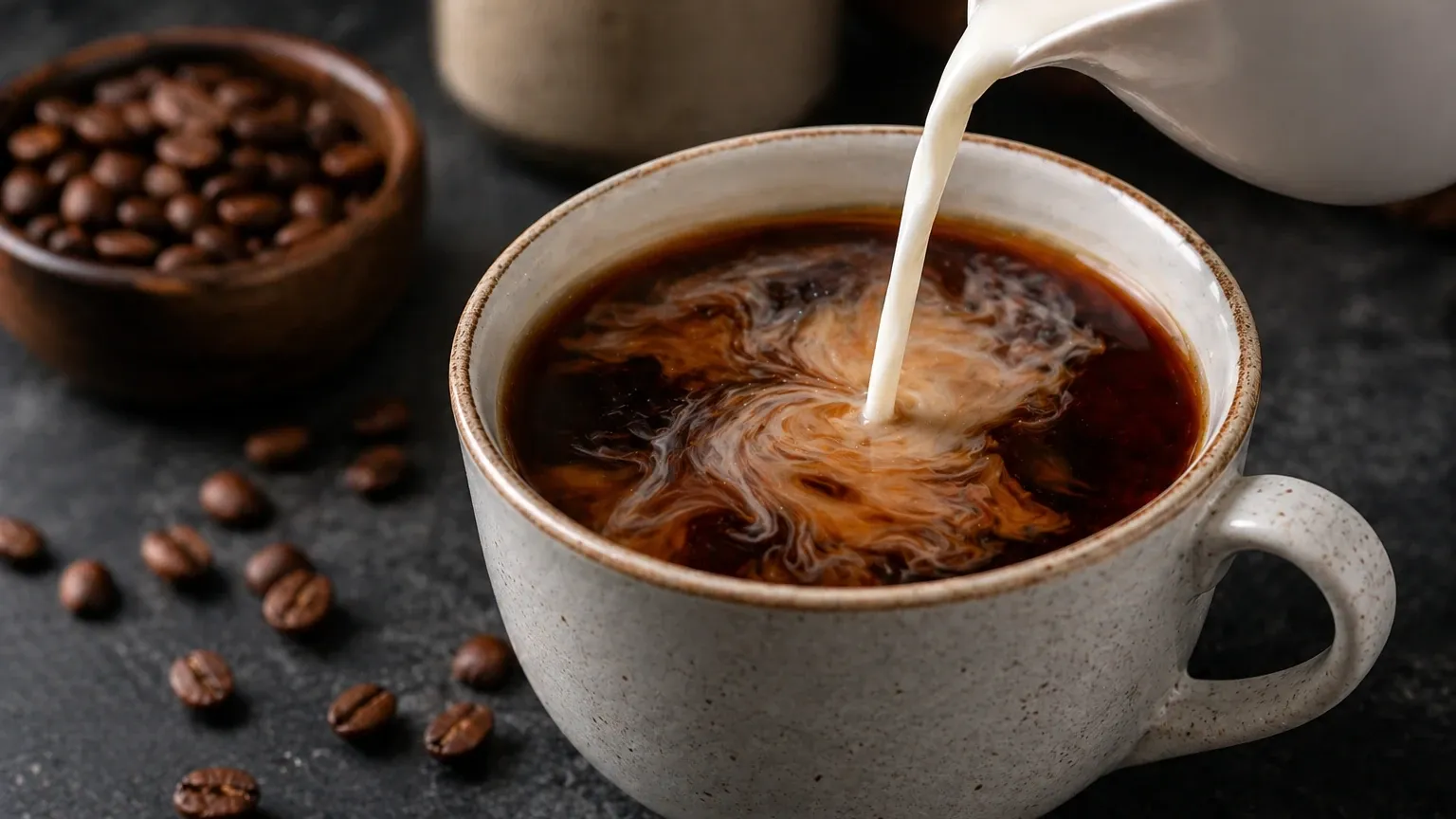
Milk straight from the fridge sits at around 4–6°C. Your freshly brewed coffee is somewhere between 85–92°C. That's a temperature gap of nearly 90 degrees. And when those two liquids meet, the heat transfer is immediate and unambiguous. Even a modest 50ml of cold milk carries enough thermal mass to lower a full cup of coffee by 10–15°C in a few seconds. That's not a gradual cool-down. That's a crash!
Milk also distributes through the cup quickly, increasing the surface area of contact and accelerating the whole exchange. It's over before you've put the jug down.
This is precisely why trained baristas steam milk to around 65°C rather than adding it cold. They're not just heating milk for texture. They're actively managing this thermal collision to preserve the drinking temperature of the finished drink.
And here's the counterintuitive bit. Adding milk sooner after brewing actually keeps your coffee warmer for longer overall. A slightly cooler liquid loses heat to its surroundings more slowly. So the impatient pour is, thermodynamically speaking, the correct one.
Now that we understand what milk does chemically, a natural next question is whether it matters which milk you use. And the answer, as you might suspect, is very much yes.
Does the type of milk have a different effect on the taste of coffee?
Your choice of milk isn't just a dietary preference or a lifestyle signal. It's a genuinely different chemical decision. One that changes what ends up in your cup in measurable, tasteable ways.
Whole Milk
Whole milk is the gold standard in most UK cafés, and there's sound chemistry behind that status. Its fat content (around 3.5%) maximises both flavour-carrying and mouthfeel. Those fat-soluble nutty and caramel notes in your espresso? Whole milk finds them and amplifies them. Its casein content is also substantial enough to meaningfully soften bitterness. The result is a drink with genuine body, natural sweetness from lactose, and a rounded finish. For espresso-based drinks, especially, nothing currently replicates what whole milk does as a complete chemical package.
Skimmed Milk
Remove the fat, and you remove the flavour-carrying capacity — it's that direct. Skimmed milk still contains casein proteins, so some bitter-binding does occur, but without fat, the aromatic compounds have nowhere to go. The result is a thinner cup that can taste slightly more acidic than its whole-milk equivalent. Interestingly, skimmed milk froths exceptionally well. Protein without fat creates a stable, voluminous foam. But the texture doesn't translate into richness on the palate. Good foam, weaker flavour.
Oat Milk
Oat milk is now the UK's most popular plant-based coffee milk, and understanding why it behaves so differently is worth a moment. It's low in protein and contains almost no fat in its standard form. It means significantly less bitter-binding and considerably less flavour amplification than dairy. What it does have is a high concentration of natural oat sugars, including beta-glucans, which contribute that characteristic sweetness and thick, almost viscous texture. Crucially, oat proteins are not casein. They don't interact with coffee's bitter compounds in the same way. Therefore, the bitterness in an oatmeal latte may be more noticeable than in a dairy latte. Barista-formulated versions address this partly by adding rapeseed oil and stabilisers to improve steaming behaviour and mouthfeel.
Soy and Almond
Soy milk has a relatively high protein content compared to other plant-based options. Some bitter-binding does occur — more than oat, noticeably less than dairy. Its weakness is stability. In very acidic coffees, soy proteins can denature and curdle visibly. Not dangerous, but not ideal. Almond milk, by contrast, offers minimal protein and fat. Its interaction with coffee is closer to dilution than transformation. What you're mostly tasting is the almond itself.
No wrong answers here. Just different chemistry producing different results. Understanding that distinction is genuinely useful.
Understanding the chemistry is one thing. But what does it mean for how you actually make and enjoy your coffee at home?
Does Milk Ruin Coffee? Answering the Question Honestly
Let's settle this one properly.
Does milk ruin coffee? The honest, chemistry-backed answer is: no. But it does change it. Whether this change will be beneficial for you depends entirely on what's in your cup and what you expect.
The purist case deserves genuine respect. A well-sourced Ethiopian Yirgacheffe, roasted light to preserve its natural jasmine and blueberry notes, is expressing something the roaster worked hard to develop. Add milk, and the casein proteins bind those delicate aromatic compounds. The acidity softens, and a meaningful portion of that complexity quietly disappears. You're not necessarily drinking a worse drink, but you're drinking a different one.
Flip to a dark-roasted Colombian or a robust Italian-style espresso blend, and milk's softening and binding effects are doing genuinely useful work. The bitterness that might otherwise dominate gets rounded out. The fat amplifies the chocolate and caramel notes already present. The result is arguably better than the black version.
So the debate isn't really about milk. It's about matching your approach to your coffee.
Try both when you get the chance — not as a test, just as curiosity. You might surprise yourself.
If you want to use this chemistry actually to improve your cup, here's what it looks like in practice.
Practical Takeaways: Using Chemistry in Your Own Kitchen
No specialist equipment required. Just a few small adjustments, informed by everything above.
- Match your roast to your milk. Light roasts (your Ethiopian single-origins, your fruit-forward filter coffees) are built around brightness and acidity. Add a lot of milk, and you're working against that. A splash, or none at all, lets the roaster's intentions come through. Dark roasts, conversely, actively benefit from milk's bitter-binding and fat-carrying effects. Work with the chemistry, not against it.
- Warm your milk first. You don't need a steam wand. A small saucepan on low heat gets you there. Milk at 60–65°C integrates far more smoothly than cold milk, preserves your cup temperature, and gives the fat compounds a better chance to do their flavour work.
- Fat matters more than you think. Whole milk is doing the most chemical-heavy-lifting. If you're on plant-based, a barista-formulated oat milk (with its added rapeseed oil) genuinely outperforms standard oat in both texture and flavour integration.
- Add milk sooner rather than later If you want your cup to stay warmer for a longer time. The thermal physics are on your side.
The next time you make a coffee, you're not just making a drink. You're running a little chemistry experiment. And now you know exactly what's happening.
That's the full picture. From the first compound in your espresso to the last sip of your milky flat white.
Conclusion — Your Cup, Your Chemistry
You're back at your mug. Same coffee, same kitchen. Yet something's shifted.
That flat white in your hand isn't just milk and espresso anymore. It's a pH negotiation, a protein binding event, a fat-soluble flavour bloom, and a thermal exchange. All happening simultaneously, in about thirty seconds, before you've even taken the first sip. The casein proteins are quietly sequestering bitter compounds. The milk fat is drawing out the chocolate and caramel notes that the black espresso was only hinting at. The temperature has already settled into something more comfortable than either liquid started at.
None of that makes your coffee more complicated to enjoy. If anything, it makes it more interesting. Understanding why a dark roast softens so beautifully with whole milk, or why your Ethiopian pour-over deserves to be tried black at least once, doesn't add pressure. It adds context. And context, in coffee as in most things, is what turns a habit into genuine appreciation.
Coffee has been studied for decades, and still holds surprises. That's rather the point.
This article is for informational and educational purposes only and does not constitute medical or professional advice. Please read our full Disclaimer for more information.
Frequently Asked Questions
Milk doesn't just dilute your coffee. It chemically transforms it. Coffee contains chlorogenic acids and quinic acid, which give it that sharp, bitter edge. Milk proteins (specifically caseins) actually bind to these acid molecules and pull them out of solution. Physically, it's reducing bitterness on your palate. Meanwhile, the natural lactose contained in milk gives it a delicate sweetness without adding a single gram of sugar. It's less about covering the flavour and more about fundamentally rewriting it — the same coffee, genuinely different chemical composition in your cup.
No — milk doesn't touch your caffeine levels one bit. Caffeine is a stable, water-soluble alkaloid that doesn't bind to milk proteins the way bitter acids do. Your oat flat white has exactly the same caffeine as the straight espresso, it's built on. What milk does affect is perceived strength. Because it softens bitterness and dilutes intensity, your brain registers it as "milder." But chemically speaking, every milligram of caffeine you started with is still very much there, doing its job.
It comes down to protein chemistry. Milk contains casein micelles. Tiny protein clusters that are naturally attracted to polyphenols, the bitter, astringent compounds in coffee. When you add milk to your espresso, caseins bind with chlorogenic acids and tannins. It forms new complexes that your taste receptors simply can't detect as bitter. It's the same reason milk softens strong tea. Full-fat milk works slightly better than skimmed here. The higher protein content means more casein available for that bitterness-binding work.
Absolutely, and dramatically. Whole dairy milk has the highest casein content, so it binds the most bitter compounds and creates the creamiest mouthfeel. Oat milk contains beta-glucan, a soluble fibre, that imitates the fat texture beautifully. But contributes its own cereal sweetness — noticeable in lighter roasts. Soy milk's proteins can curdle in acidic espresso, which causes that unpleasant grainy texture. Almond milk, being mostly water with minimal protein, has no major effect on the chemical transformation of coffee.
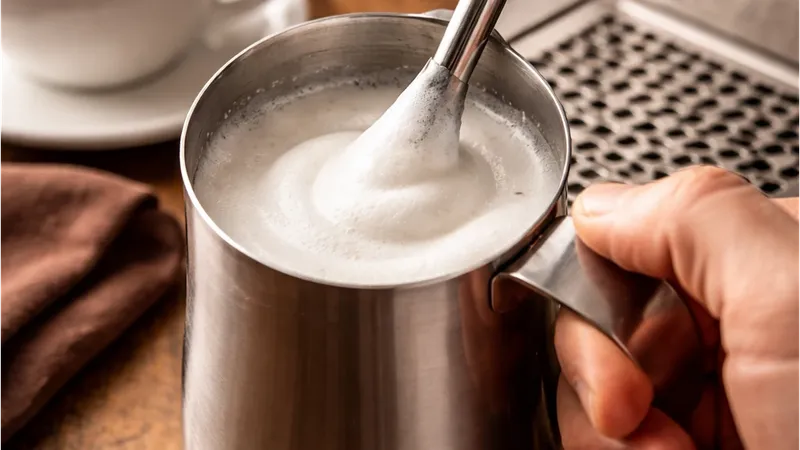
Lovely bit of chemistry this. When you steam milk above 60°C, heat energy breaks down lactose molecules — milk's naturally occurring sugar — into simpler glucose and galactose. These smaller molecules are significantly sweeter on your palate than intact lactose. You're not adding anything; you're unlocking sweetness that was always there. This is precisely why a well-made 65°C flat white tastes noticeably sweeter than an iced latte using the same milk. Overheating beyond 70°C, though, starts denaturing proteins and kills that silky texture entirely.