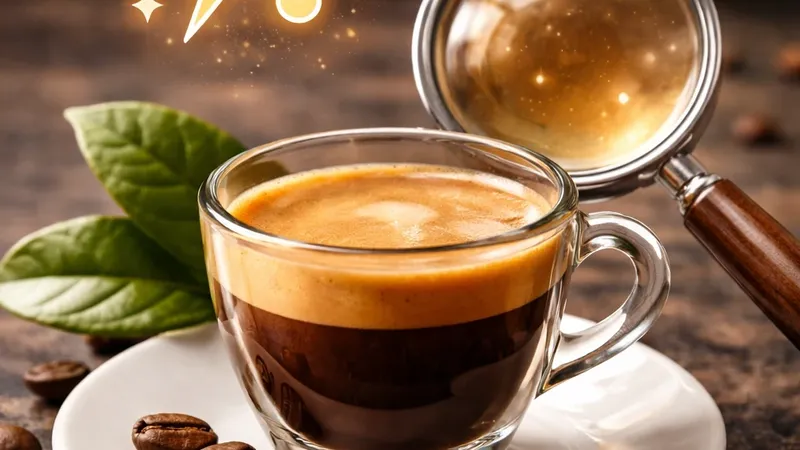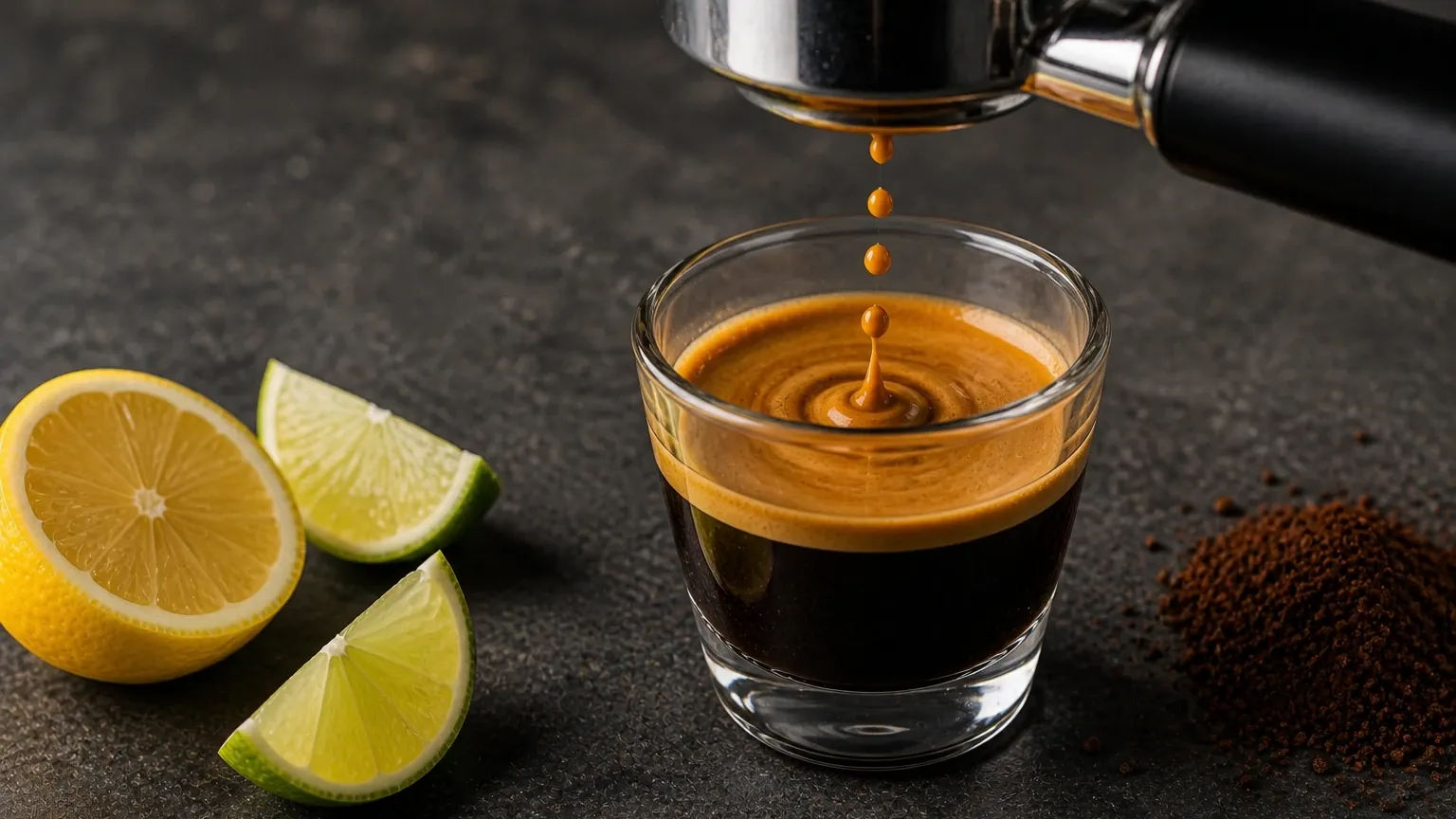
You know the face. You've made it yourself. That first sip of espresso that makes your eyes narrow and your lips pull back as if you've just bitten into an unripe lemon. You were expecting something rich, maybe a little chocolatey, warm in all the right ways. Instead, your morning cup has let you down again.
If you've been Googling "why espresso tastes sour" at 7am with the quiet desperation of someone who really needed that coffee to be good — welcome. You're in exactly the right place.
Here's the thing. A sour espresso isn't bad luck, and it isn't your machine being temperamental. It's chemistry. Specific, understandable, fixable chemistry. The same science that explains why your sourdough goes tangy or your vinaigrette bites back is quietly at work in that tiny demitasse cup.
Before we talk about what to do, let's first discuss what's actually happening
Is Espresso Supposed to Be Sour?
The short answer is no. But it's complicated.
Good espresso absolutely has acidity. That's not a flaw. It's part of what makes speciality coffee taste alive rather than flat. A well-roasted Ethiopian natural, for instance, brings a blueberry-jam brightness that makes you sit up. A quality Kenyan single-origin might have a clean citrus lift (almost like blood orange) that's genuinely lovely. That's acidity doing its job beautifully.
Sourness is something else entirely.
The difference is balance. In a well-pulled shot, acidity is one voice in a chorus. It sits alongside sweetness (think brown sugar, caramel) and a measured bitterness that grounds everything. You taste complexity. You taste layers.
When espresso is sour, the chorus collapses. The acidity becomes the only thing speaking — sharp, aggressive, one-dimensional. There's no sweetness to catch it, no body to round it out. It doesn't taste bright. It tastes wrong.
So is espresso supposed to be sour in that way? Absolutely not.
The good news is that unpleasant sourness has a very specific cause. And that cause lives in your extraction — which means it's well within your control.
Let's visit your inner food chemist for a moment.
What Causes Sour Espresso? The Chemistry, Explained Simply
It Starts With Acids — And Not All of Them Are the Enemy
Think of a green coffee bean as a tightly packed bundle of potential. It contains dozens of organic acids (chlorogenic acids, citric acid, malic acid, acetic acid) and every single one of them is supposed to be there. They're not contaminants or mistakes. They're what give coffee its character. In the same way that tartaric acid gives a good Burgundy its backbone.
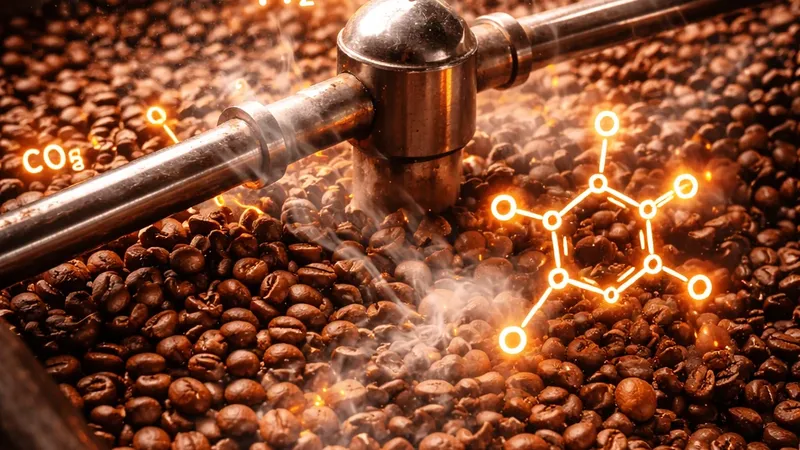
The most abundant of these are chlorogenic acids, which make up roughly 6–10% of the green bean's dry weight. When the heat hits them during roasting, they begin breaking down into two daughter compounds: quinic acid and caffeic acid. Both of which taste sharp and astringent at high concentrations. A light roast retains more of the original chlorogenic acids intact. A darker roast converts more of them. Neither is inherently wrong, but it does mean your cup's acid profile is already being shaped before the hot water is near the grounds.
The roast begins to unwrap the bundle. The extraction completes the job — for better or worse.
Extraction Is Everything — Why Sour Usually Means Underextracted
So what causes sour espresso specifically? In most cases, the answer is underextraction. Understanding why this happens requires one simple idea. Not all soluble compounds leave the coffee grounds at the same speed.
Water is impatient with acids. Acetic acid and the more soluble chlorogenic derivatives dissolve quickly and eagerly. They're among the first compounds to leave the grounds and enter your cup. Sugars and melanoidins, on the other hand, are more reluctant. Melanoidins are the large, complex molecules created during the Maillard reaction. They're responsible for the sweetness, body, and caramel depth that make a great espresso taste rounded rather than raw. They require more time, more heat, and more contact to extract properly.
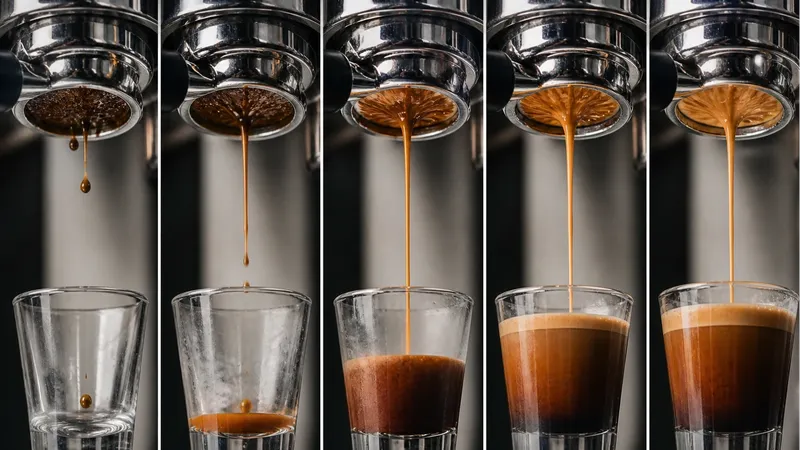
A shot that runs too fast (at too low a temperature, through too coarse a grind) gives water just enough time to grab the acids. But not nearly adequate to reach for the good stuff. In extraction yield terms, you're pulling somewhere below the ideal 18–22% of the grounds' soluble mass. The sour compounds made it into your cup. The sweet ones didn't.
That's the imbalance you're tasting.
Now that we know exactly why it's happening at a molecular level, let's look at the three practical levers you can pull at home to fix it.
Your Espresso Is Too Sour — Here's What to Adjust
The chemistry has pointed us clearly toward the problem. The water isn't spending enough time with the right compounds. Everything that follows is simply about giving it the conditions to do a better job.
Grind Finer, And Give the Water More to Work With
This is your first port of call. Honestly, it's the adjustment that makes the biggest difference most reliably.
When your grind is too coarse, the water finds the path of least resistance. It moves through the grounds quickly and picks up the highly soluble acids. And exits before it ever gets near the melanoidins and sugars sitting deeper in the particle. It's a bit like speed-reading a novel and only retaining the punctuation.
Grind finer, and two things happen. The smaller particles expose dramatically more surface area to the water. The tighter packing slows the flow rate down. Both effects push extraction toward completeness. More compounds dissolve, and the sweet and complex ones make it into the cup.
A practical rule of thumb: if your shot is finished in less than 20 seconds, your grind is almost certainly too coarse. Start there, adjust in small increments, and taste as you go.
Raise Your Brew Temperature — Heat Is a Catalyst
Temperature is essentially molecular energy. The hotter the water, the faster and more forcefully it can pull soluble compounds out of the grounds. Including the heavier and more reluctant ones, such as melanoidins, which are responsible for sweetness and body.
Most home espresso machines are designed to operate between 90 and 96°C, but many run at the cooler end of that range by default. That's often enough for a medium roast. Push a light roast through water at 90°C, and you're not giving the chemistry a fair chance. You'll extract the acids and leave the sweetness behind.
For lighter roasts, aim for 93–96°C. And critically: let your machine warm up properly. Many home machines need 20–30 minutes to fully stabilise their temperature — not the 2 minutes the indicator light suggests.
Extend Your Brew Time — Let the Shot Breathe
Contact time is the third variable, and it works in concert with the other two. The standard target for a well-balanced espresso is a 1:2 brew ratio. So 18 grams of coffee in, 36 grams of liquid espresso out, over roughly 25–30 seconds.
If your shot is running short, grind finer first (that will naturally extend the time). Once your timing is in range, small adjustments to your dose (the amount of coffee in the basket) can fine-tune extraction concentration without dramatically altering flow rate.
Think of the brew ratio less as a rigid rule and more as a helpful compass. It tells you roughly where you are on the extraction map.
There's one more factor that often gets overlooked. It sits much earlier in the process, before you even open the bag.
Don't Forget the Bean — Roast Level and Freshness Matter Too
Light roasts are inherently more acidic. The roast has been shorter and cooler. More chlorogenic acids remain intact in the bean. They haven't had time to break down into their less acidic derivatives. That's not a defect. It's the trade-off for the delicate florals and fruit-forward complexity that make a good Ethiopian Yirgacheffe so compelling. It does mean, however, that your extraction technique needs to be dialled in more precisely. There's less margin for error.
Freshness matters too, in both directions. Coffee roasted fewer than five to seven days ago is still actively degassing CO₂. That residual gas interferes with extraction. It can make the drink sharp and sour. The stale coffee loses its soluble compounds unevenly, and the sweetness tends to go first, leaving acidity exposed.
Origin plays a role as well. High-altitude, washed-process coffees (think Kenyan or Colombian single origins) are structurally higher in perceived acidity than a natural-process Brazilian.
Knowing your bean means your technique becomes calibration, not guesswork.
You've now got the full picture. Let's bring it all together.
A Quick Diagnostic — What Is Your Sour Espresso Telling You?
If your espresso is too sour and you want a fast answer. Here's your cheat sheet. Match your symptom, find your fix.
- Your shot finished in under 20 seconds. Grind finer. Full stop. The water moved too quickly and only grabbed the acids.
- The espresso tastes sharp, thin, and almost watery. Classic underextraction. Start with grind size, then check your brew temperature is sitting above 92°C.
- Your coffee was roasted less than five days ago. Rest the beans. CO₂ is still escaping the grounds and disrupting extraction. Give it until day seven and taste again.
- You've just switched to a light roast for the first time. Higher acidity is a part of the deal with lighter roasts. Nudge your brew temperature up to 94–95°C and grind slightly finer than you think it needs.
- Your espresso used to be fine, but has recently turned sour. Something upstream has changed. Check your grinder burrs for wear. Inspect your water filter (mineral content affects extraction chemistry). Or consider whether you're working through a new bag from a different origin or harvest.
Once you understand the chemistry, it stops feeling like guesswork. Espresso becomes a conversation between you and the cup — and you're finally fluent.
The Bottom Line — Sour Espresso Is a Problem With a Solution
Sour espresso isn't a character flaw. It isn't even bad luck. It's a solubility problem. Acids extracted too early, sweetness left behind in the grounds. Now that you know that, you're already better equipped than most home baristas.
The fix lives in three places. Grind finer to slow the water down. Brew hotter to reach the compounds that need coaxing. Give the shot enough time to extract past the sharp stuff and into the good stuff. Layer in what you now know about roast level, bean freshness, and origin, and you're not guessing anymore. You're making informed decisions.
The chemistry was always on your side. You just needed an introduction.
If you'd like to go deeper, we'd love to show you what else is happening inside your cup of coffee. From how water hardness shapes extraction to why milk behaves the way it does in a flat white. A lot is going on in there, and it's all fascinating.
This article is for informational and educational purposes only and does not constitute medical or professional advice. Please read our full Disclaimer for more information.
Frequently Asked Questions
Almost certainly a temperature issue. Most home espresso machines need far longer to fully stabilise than the indicator light suggests — sometimes 20 to 30 minutes. First thing in the morning. Your machine's brew group is still cold. This means the water hitting your grounds is cooler than the display claims. Cooler water extracts acids readily but struggles with the sweeter, heavier compounds. Give your machine a proper warm-up and pull a blank shot before your first espresso.
Usually yes — but not always. Grinding finer slows water flow and increases surface area. This pushes extraction towards the sweeter compounds that balance out acidity. It's the right first move for most sour shots. However, if your coffee is simply too fresh (under five days off roast) or you're using a genuinely high-acid Kenyan or Ethiopian bean, grinding alone won't fully compensate. You may also need to raise the brew temperature to 94–95°C.
Absolutely — and it's more common than people realise. Water that's too soft lacks the magnesium ions that help extract sweetness and body from coffee grounds. Without them, your extraction will be acid-based. The cup tastes sharp and thin even when your grind and temperature are spot on. In the UK, water hardness varies enormously by region. London water is famously hard, while Scottish water is very soft. A decent water filter or Third Wave Water minerals can genuinely transform your espresso.
Price doesn't fix technique. A £25 bag of single-origin Ethiopian from a top-tier speciality roaster will taste spectacularly sour if it's underextracted. Arguably more so than cheaper coffee, because high-quality light roasts carry more intact chlorogenic acids and require more precise extraction to balance. Expensive coffee actually demands better technique, not less. Check your shot time (25–30 seconds), your brew temperature (minimum 93°C for light roasts), and ensure the beans have rested at least a week post-roast.
Perfectly safe — it just tastes unpleasant. The sourness stems from naturally occurring organic acids, such as chlorogenic acid, citric acid, and acetic acid. All of them are found in plenty of foods you eat without a second thought. Chlorogenic acid, for instance, is abundant in apples and artichokes. The only real concern is that highly acidic drinks can aggravate acid reflux in sensitive individuals. If your stomach protests, fix the extraction — and therefore the acid balance. This is a much better solution than switching to darker roasts.