Whether you're rushing for your morning flat white. Lingering over a pour-over at your favourite independent café. Or quietly obsessing over the home roasting trend sweeping British kitchens. You already know "good" coffee when you taste it.
But here's something that stops most halfway through a sip. Green coffee beans have a completely different taste from regular, dark ones. Chew one raw, and you'll find grassy, bland, almost vegetal flavours. No aroma. No depth. Nothing remotely resembling what ends up in your cup.
So what on earth happens inside that roaster?
The answer is chemistry — and it's far more fascinating than you'd expect.
Roasting isn't simply "applying heat." It triggers a cascade of chemical reactions that fundamentally dismantles and rebuilds the bean's entire flavour profile. creating hundreds of new compounds that didn't exist before.
Over the next few minutes, we'll break down exactly how that transformation works. No chemistry degree required, just curiosity and a decent brew beside you.
The Science of Roasting Coffee Beans
- Sugars break down and caramelise
- Amino acids react (Maillard reaction)
- Chlorogenic acids degrade
- Aromatic compounds form
- Moisture evaporates
Roasting Temperature and Process
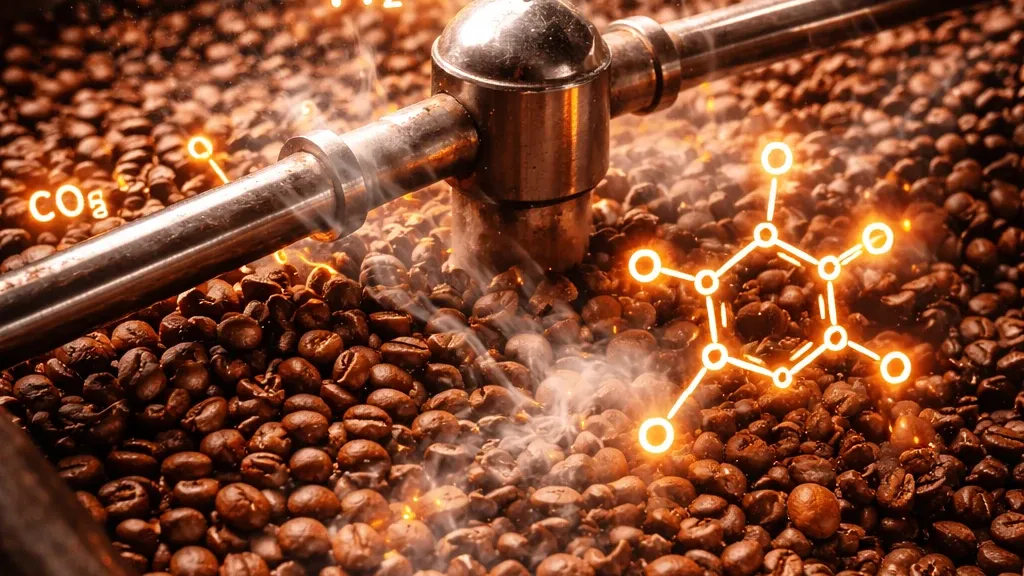
Most coffee is roasted between 200°C and 250°C. The relatively short, intense process that triggers dramatic physical changes. The beans lose moisture rapidly, expand in size, and shift from a pale green to a yellow to a deep brown colour. But the real story isn't visual. It's chemical.
Key Chemical Reaction
Maillard Reaction — The Most Important One
This is where the magic begins. When heat causes sugars and amino acids to interact, they produce hundreds of new flavour compounds. The most important are brown pigments (called melanoidins) and the complex aromas we instinctively associate with fresh coffee. No Maillard reaction, no coffee as we know it.
Caramelisation
As temperatures increase, sugars begin to break down independently. It contributes sweetness and body to the final morning mud. This is why darker roasts often taste richer, but if you overdo it, the sweetness turns into bitterness.
Pyrolysis
At the highest temperatures, organic compounds break down entirely through pyrolysis. In this stage, the smoky, bitter notes characteristic of dark and espresso roasts are generated.
Strecker Degradation
Finally, amino acids convert into aromatic aldehydes through Strecker degradation. It layers the additional aroma complexity that makes each roast profile genuinely unique.
How Roasting Creates Coffee Flavour and Aroma
Formation of Aromatic Compounds
Here's a number worth pausing on. The raw green beans contain roughly 300 chemical compounds. After roasting, that figure explodes to over 800.
That extraordinary leap explains everything. Why does roasted coffee smell so intoxicating? Why do flavour profiles vary so dramatically between origins and roast levels? Why coffee remains one of the most chemically complex beverages on the planet? Each of those additional compounds contributes something: fruitiness, nuttiness, smokiness, florals, and caramel. Often several at once.
Why Roasted Coffee Smells So Good
That irresistible aroma drifting from a freshly opened bag (or a café you're passing on a grey Tuesday morning) is thanks to volatile organic compounds( VOC). These are aromatic molecules produced during roasting which evaporate easily at room temperature. They travel straight to your nose before you've taken a single sip.
They're generated primarily through two processes you have already recognised. The Maillard reaction produces multi-layered, complex aromas from the sugars and amino acids. The caramelisation adds sweetness and warmth to the overall scent profile.
It's less mystical than it feels. But knowing the science somehow makes that first morning sniff even more satisfying.
Light vs Medium vs Dark Roast — What's Actually Different?
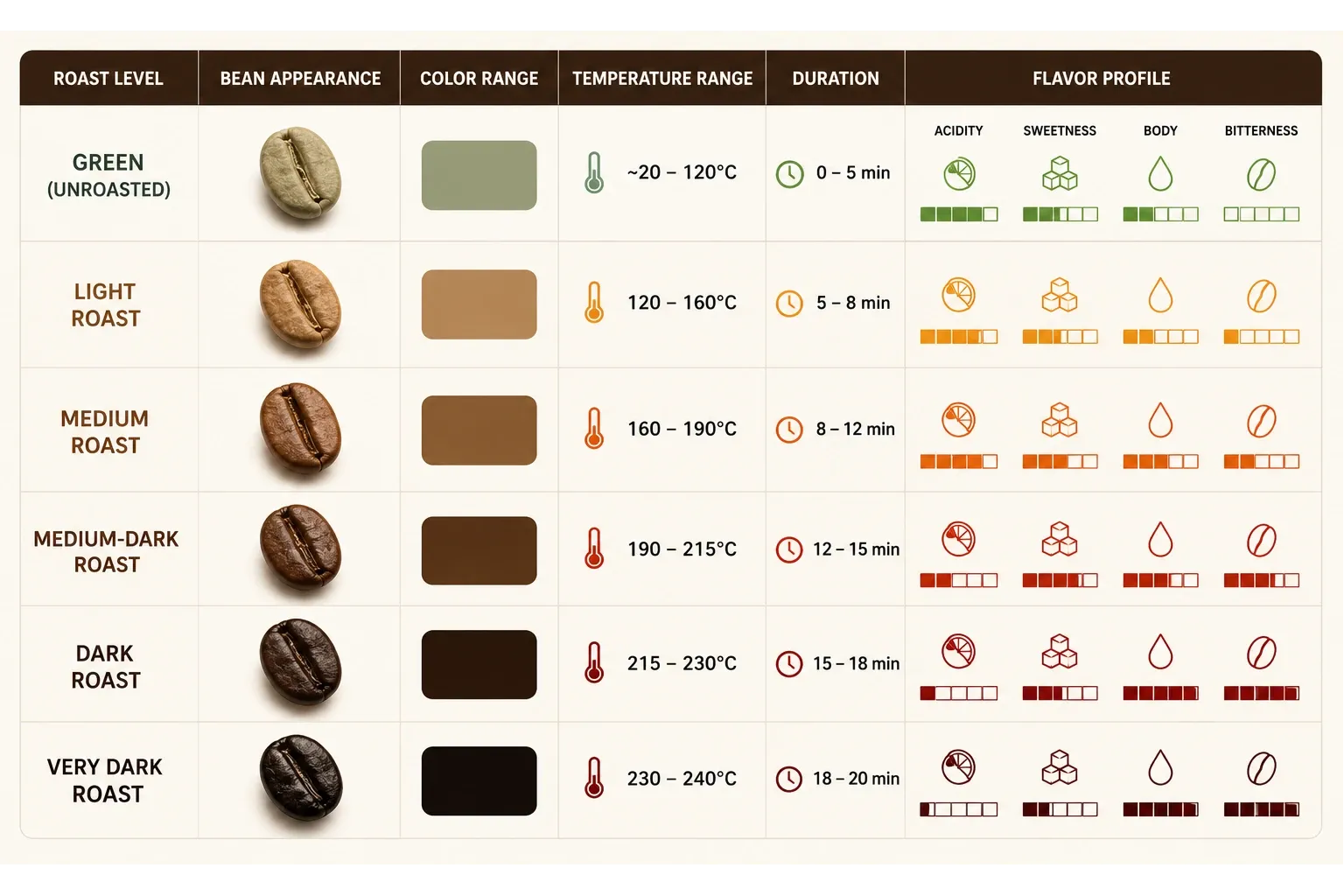
Most coffee drinkers have a roast preference. Fewer know that preference is rooted in genuine chemical differences, not just colour or convention.
Light Roast
Light roasts are stopped early. This means less time for chemical reactions to run their course. The result? Higher concentrations of chlorogenic acids, greater acidity, and a flavour profile that still reflects the original character of the bean. Its origin, soil, and altitude. If someone describes their coffee as "bright," "floral," or "fruity," they're tasting chemistry that's been deliberately preserved.
Medium Roast
Medium roasts gain a kind of chemical optimal balance. Enough reactions have occurred to develop complexity and body, while retaining plenty of the coffee bean's original compounds to keep things interesting. Many roasters consider this peak flavour territory. The broad popularity of medium roasts suggests most drinkers agree, whether they realise it or not.
Dark Roast
Push the temperature further, and compound degradation accelerates. Chlorogenic acids diminish significantly, sweetness fades, and carbon-like compounds begin to dominate. It produces the bold, bitter, smoky character that dark roast drinkers actively seek. This is a more aggressive chemical profile than previous ones, and unmistakably visible in the cup of coffee.
Physical Changes During Roasting
The chemical story of roasting is inextricably linked to what's happening physically. You can actually "see" and "hear" the transformation unfolding. It makes coffee roasting uniquely satisfying to witness.
Colour Change
The shift from pale green through yellow to deep brown isn't cosmetic. This is a direct visual indicator of the Maillard reaction in real time. The darker the bean, the further those chemical reactions have run. Which is why colour remains one of the most reliable indicators of roast level, even for professionals.
Expansion and "First Crack"
As internal temperatures rise, moisture converts to steam, and CO₂ builds up inside the bean. Eventually, the pressure becomes too great, and the bean audibly cracks, expanding significantly in size. This moment (known as "first crack") signals a structural shift. The bean becomes porous and brittle. This allows water to extract all those flavour compounds so effectively during brewing.
Moisture Loss
Before any of this drama unfolds, the bean first sheds its moisture content. Dropping from roughly 10–12% water down to just 1–3%. This drying phase isn't merely preparatory. Removing that moisture is what enables the heat-driven chemical reactions to properly begin. Without it, roasting simply wouldn't work.
How Roasting Affects Caffeine, Acidity and Taste
Caffeine, acidity, and bitterness are the qualities most drinkers actually notice in the cup. Understanding how roasting affects each one helps clear up a surprising amount of common confusion.
Caffeine Content
Caffeine is remarkably heat-stable. Despite the chemical changes that occur during roasting, caffeine levels remain largely unchanged from the green bean to the roasted bean. One nuance is worth noting: because beans lose mass during roasting (primarily through moisture loss), a darker roast can appear marginally more concentrated by weight. However, in practical terms, roast level is a poor indicator of caffeine strength.
Acidity
Acidity decreases progressively as roasting continues. This is directly tied to the breakdown of chlorogenic acids discussed earlier. The longer the roast, the more those acids degrade, and the smoother, less bright the cup becomes. Light roast drinkers are essentially choosing higher acidity, whether they frame it that way or not.
Bitterness
Bitterness moves in the opposite direction to acidity — rising as roast level increases. The primary drivers are pyrolysis. The broader breakdown of organic compounds at higher temperatures is done. What many drinkers interpret as "strength" in a dark roast is, chemically speaking, largely bitterness. It's worth remembering this when choosing your next bag.
Why Roasting Is Essential for Coffee
It's easy to take roasting for granted — but strip it away, and coffee as we know it doesn't exist.
Raw (Green) Coffee Beans
Green beans contain the "potential" for everything we love about coffee, but none of the reality. Taste one, and you'll find something grassy, astringent, and faintly unpleasant. Closer to chewing a dried herb than anything resembling a morning brew. There are no aromatic compounds there yet. The flavour complexity hasn't developed. The drinkability is practically zero.
Roasted Coffee Beans
Roasting changes everything. That same bean, exposed to the right heat for the right duration, undergoes the cascade of chemical reactions we've explored throughout this piece. Those are: Maillard reaction, caramelisation, pyrolysis, and Strecker degradation. And coffee seed emerges transformed. Aroma develops. Sweetness, bitterness, and acidity find their balance. The bean becomes something genuinely worth brewing.
The key takeaway is deceptively simple. Roasting doesn't add anything to the coffee bean — it unlocks what's already there.
All the chemical potential is present in the coffee green bean from the moment it's harvested. Heat is simply the catalyst that converts that potential into the flavour, aroma, and drinkability. That makes coffee one of the world's most beloved drinks.
Practical Tips for Coffee Drinkers
Understanding the science is satisfying. Here's how to actually use it when buying, roasting, and storing your coffee.
Choosing Coffee Beans for Roasting
If you're exploring home roasting, start with freshness and transparency. Look for green beans with a clearly stated origin: country, region, and ideally farm or cooperative. This matters because the chemical potential we've discussed varies significantly by source. Soil, altitude, and processing method all influence what roasting will ultimately unlock. A reputable supplier will provide you exactly what you're dealing with.
Matching Roast Level to Taste
Let chemistry guide your preference rather than habit or packaging:
- Light roast — fruity, bright, and acidic; best for appreciating the origin character
- Medium roast — balanced acidity, sweetness, and body; reliably crowd-pleasing
- Dark roast — bold, bitter, and smoky; suits espresso and milk-based drinks particularly well
Storing Roasted Coffee Beans
Roasted beans are chemically active and deteriorate quickly once exposed to air, heat, and light. Store them in an airtight container, away from direct sunlight and heat sources. The best place is a cupboard, not a windowsill. For best results, buy in smaller quantities and use within two to four weeks of the roast date. Freshness isn't fussiness. It's chemistry.
Common Myths About Roasting Coffee Beans
A little knowledge goes a long way in coffee. Nowhere more so than in busting the myths that circulate endlessly in café queues and online forums.d
"Darker Roast means More Caffeine"
This is probably the most widespread coffee myth. The reality, as we've covered, is that caffeine remains largely stable throughout the roasting process. Darkness indicates flavour profile (bitterness, body, smokiness), not stimulant strength. If caffeine intake matters to you, roast colour is genuinely not a reliable guide.
"Roasting Only Changes Flavour"
A reasonable assumption, but a significant underestimation. Roasting doesn't tweak flavour. It transforms the bean's entire chemical composition. Acids degrade, sugars break down, proteins react, and volatile compounds multiply from roughly 300 to over 800. The roasted bean shares relatively little chemically with its green counterpart. Flavour is the outcome. Chemistry is the mechanism.
"All Roasts Are the Same"
Given everything we've explored, this one should now feel obviously false. Light, medium, and dark roasts represent genuinely distinct chemical profiles. We obtain different acid levels, different compound concentrations, and different aromatic structures. Roast level isn't a matter of preference. It is only dressing up the same product. It's a fundamentally different result from the same raw ingredient.
Conclusion: Roasting Is Chemistry in Action
Next time you open a fresh bag of coffee (that hit of aroma before you've even brewed a cup), you'll know exactly what you're experiencing.
Roasting takes three unremarkable raw materials: sugars, acids, and proteins. Through a precise cascade of heat-driven reactions (Maillard, caramelisation, pyrolysis, Strecker degradation), it converts them into something genuinely extraordinary. Aroma that stops you mid-stride. Flavour with depth, balance, and character. Colour that signals exactly how far that transformation has gone.
None of it is accidental. Every roast profile, every origin choice, every decision about temperature and timing is an intervention in a chemical process. One that's been refined over centuries. However, the science behind it has only recently been fully understood.
For curious coffee drinkers, this knowledge doesn't diminish the pleasure of a great cup of coffee. If anything, it deepens it. You're not just a matter of taste preference. You're sampling chemistry, agriculture, and craft converging in a single moment.
Whether it's a delicate light roast pour-over on a slow Sunday morning or a bold double espresso before the Monday commute. Each cup of coffee begins with a chemical transformation powered by heat.
This article is for informational and educational purposes only and does not constitute medical or professional advice. Please read our full Disclaimer for more information.
Frequently Asked Questions
When coffee beans are roasted, they undergo a series of chemical and physical transformations driven by heat. Moisture evaporates, the beans expand, and their colour shifts from green through to deep brown. Internally, sugars break down, acids degrade, and proteins react. It produces hundreds of new aromatic and flavour compounds that simply don't exist in the raw green bean. The result is the complex aroma, flavour, and drinkability we associate with coffee.
Four key reactions drive the transformation. Those are: the Maillard reaction (sugars and amino acids combining to create flavour compounds and brown pigments), caramelisation (sugar breakdown contributing sweetness and body), pyrolysis (thermal degradation producing smoky, bitter notes), and Strecker degradation (amino acids converting into aromatic aldehydes). Together, these reactions increase the bean's chemical compound count from roughly 300 to over 800.
Very little. Caffeine is chemically stable at roasting temperatures and remains largely unchanged throughout the process. The common belief that darker roasts contain more caffeine is a myth. Roast colour reflects flavour intensity, not caffeine strength.
Raw green beans have a grassy, astringent, and unremarkable flavour. This is because the flavour compounds we associate with coffee haven't yet formed. Roasting acts as the catalyst that unlocks the bean's chemical potential. Converting sugars, acids, and proteins into the aroma, complexity, and balance. That makes coffee one of the most chemically rich beverages in the world.