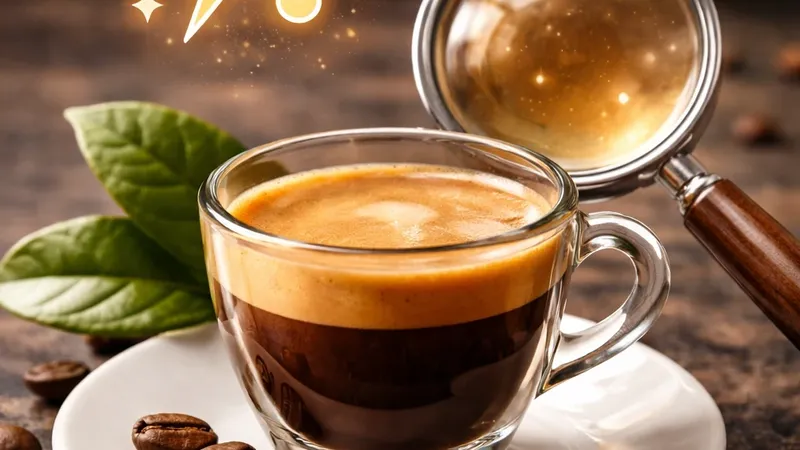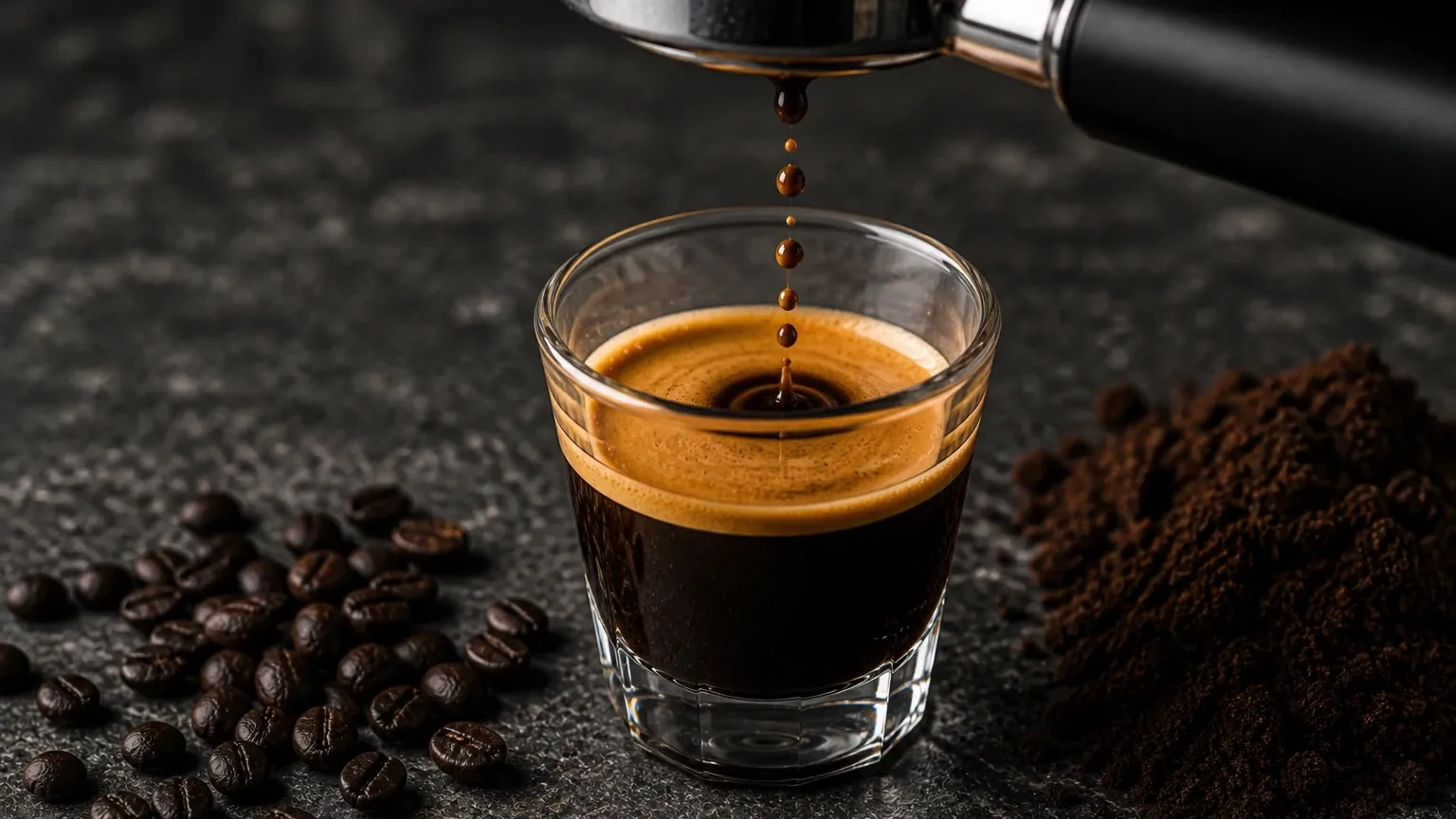
You've ground the beans fresh. The portafilter is hot. The crema looks like something from a speciality café on Bermondsey Street. You take that first sip and — there it is. A sharp, almost metallic bitterness that lingers long after it should.
It's gutting, isn't it?
Here's the thing. If your espresso regularly tastes bitter, you're in excellent company. It's one of the most common complaints among home baristas. It happens to people who've spent serious money — proper grinders, decent machines, freshly roasted single-origin beans from a reputable roaster. The kit isn't the problem. Or at least, not usually.
Understanding "why espresso is bitter" is the single fastest route to fixing it. The answer, as it happens, lives in chemistry. Don't worry, there's no periodic table involved. Just a few elegant explanations that'll change how you think about every shot you pull.
Before we get into what's going wrong. It's worth understanding what a well-balanced espresso is actually doing. Because a little bitterness isn't the villain here.
A Quick Word on Bitterness. It's Not All Bad.
Here's something that might surprise you. Bitterness in espresso isn't inherently wrong. In fact, without it, your shot would taste flat, cloying, and oddly unfinished.
Your tongue detects bitterness through a family of proteins called TAS2R receptors. You've got 25 different subtypes. All originally evolved to warn you away from toxic plants. Useful, once upon a time. In a well-pulled espresso, though, low levels of bitterness do something rather lovely. They push back against the sweetness and acidity, creating the kind of layered complexity that makes you reach for a second cup.
The dark chocolate character in a good espresso. That comes from melanoidins. Compounds formed during roasting that deliver a rounded, genuinely pleasant bitterness. That's the good stuff.
The problem starts when specific compounds are released in excess. When the bitter notes stop adding depth and start bulldozing everything else in the cup. That's when bitterness tips from feature to flaw.
So, which compounds are actually responsible when your espresso tastes more like a mouthful of ash than a chocolatey morning ritual? Let's meet the main culprits.
The Chemistry Behind the Bitterness — The Real Culprits
Chlorogenic Acid Lactones (and Their Nasty Offspring)
Chlorogenic acids (CGAs) - if you want to sound impressive at your next dinner party - are naturally occurring antioxidants found in green coffee. In their raw form, they're genuinely good for you. The trouble starts in the roaster.
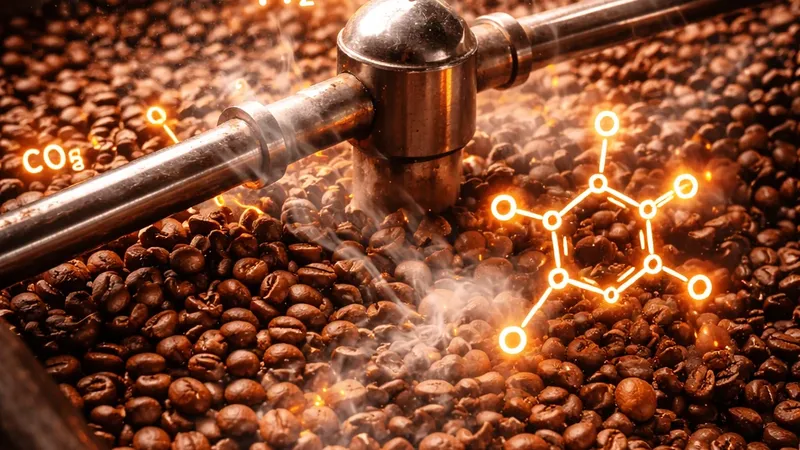
Under the influence of heat, CGAs transform into chlorogenic acid lactones. At medium roast levels, these contribute a mild, almost pleasant bitterness — think the clean finish of a well-made Americano. Push the roast further (or let your extraction run long), and those lactones degrade again into compounds called phenylindanes. These are the ones responsible for that harsh, mouth-coating astringency that lingers long after the cup is empty. If your espresso tastes burnt, phenylindanes are almost certainly involved.
Diketopiperazines — The Compound Nobody Talks About
Diketopiperazines (DKP) do not receive enough attention given the scale of damage they cause. They're small cyclic molecules formed when amino acids bond together during the roast process. They're intensely bitter even at concentrations you'd measure in parts per million.
Crucially, DKPs are released mainly in the later stages of extraction. A shot that runs to 40 seconds rather than 28, or a grind that's a touch too fine, dramatically increases their load in your cup. This is one of the undiscussed but most consequential reasons why espresso tastes bitter.
Caffeine — Probably Not the Culprit
Caffeine is bitter, yes. But research consistently shows it accounts for only around 10–15% of the perceived bitterness in a typical espresso. Switching to a lower-caffeine bean without addressing your extraction variables is akin to turning down the radio to fix a check engine light.
Now that we know which molecules are causing the trouble. It’s time to ask. What's actually triggering their release? Here's where your technique and your kit come into the picture.
The Main Reasons Why Espresso Is Bitter (What You Can Control)
Over-Extraction — The Number One Offender
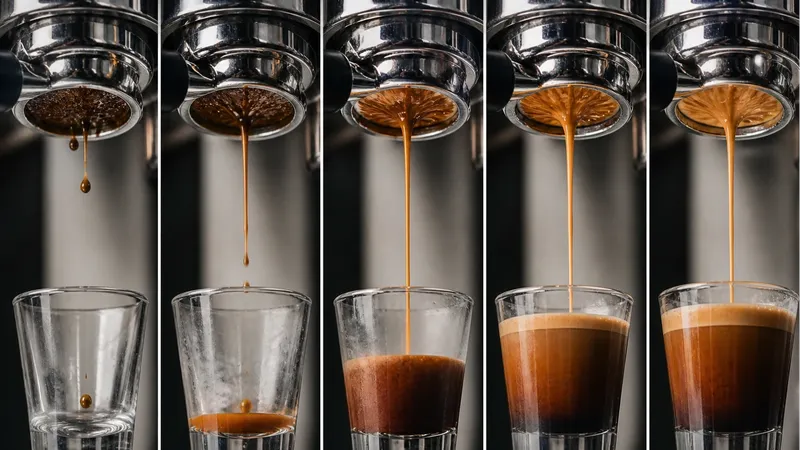
Think of extraction as a timeline. When hot water first meets your coffee grounds, it pulls out the bright, soluble compounds. Those are fruity acids, sugars, the things that give espresso its sweetness and liveliness. As extraction continues, it moves into heavier territory. The melanoidins add body, and then finally the DKPs and phenylindanes (we met earlier). The harsh, lingering, bitter compounds that nobody invited.
A well-extracted espresso yields an extraction rate of roughly 18–22%. Go beyond that, and you're essentially wringing the last, most unpleasant compounds out of the puck. If you're regularly asking yourself, "Why does my espresso taste bitter?", over-extraction is the answer (in most cases). It's usually caused by one (or several) of the following: a grind that's too fine, a shot time that's running too long, a dose that's too high for your basket, or water that's hotter than it should be.
Fix one variable at a time. The clarity that brings is genuinely satisfying.
Water Temperature — The Silent Variable
Espresso extraction behaves very differently depending on temperature. The sweet spot sits between 90–96°C. Within this range, water effectively dissolves the desired compounds without excessively accelerating the release of bitter compounds. Push over 96°C and the chemistry tips. Bitter compound solubility increases faster than sweetness and acidity, and the cup pays the price.
Here's the uncomfortable truth. Many entry-level home machines run hotter than their dials suggest. A £300 machine should claim 93°C , but it might be delivering 98°C at the group head. If your espresso consistently tastes burnt despite fresh beans and a proper grind, a cheap thermometer strip on your portafilter is a worthwhile three-quid experiment before you start blaming anything else.
Grind Size — Finer Isn't Always Better
A finer grind creates more surface area. This means faster, more aggressive extraction, useful to a point, ruinous beyond it. Grind too fine, and you're extracting bitter compounds before the shot has finished flowing.
Equally problematic is inconsistent grinding. Budget burr grinders and blade grinders produce a wide range of particle sizes simultaneously. The fine particles over-extract almost instantly. The coarser ones barely extract at all. The result is a drink that's both bitter and sour at the same time. Muddled and unpleasant in a way that's hard to diagnose. Blade grinders, specifically, are chemically incompatible with good espresso. No amount of technique compensates for particle size chaos.
Tamping and Channelling
Uneven tamping, a puck that's denser on one side, or has a small crack running through it. This creates channels. The low-resistance paths where water rushes through rather than percolating evenly. Those channelled areas over-extract dramatically while the surrounding coffee barely gives anything up.
The result is bitterness and sourness in the same mouthful. It's the worst of both worlds, and it's almost always invisible until you know what to taste for.
Dirty Equipment — The Overlooked Culprit
This one doesn't get nearly enough attention. Coffee oils are chemically unstable. Left on your portafilter basket, group head, or shower screen. They undergo hydrolysis and beta-oxidation, breaking down into short-chain fatty acids and aldehydes that have acrid, rancid, and deeply bitter taste. This process happens at room temperature and takes less time than most people assume.
A machine that hasn't been backflushed in a fortnight. A portafilter basket with visible brown residue. A shower screen with compressed old grounds. All of these are quietly poisoning otherwise decent shots. This is one of the most common and easiest to solve reasons why espresso tastes bitter in home setups. It costs nothing but five minutes and some cleaning tablets.
Your beans themselves also contain a huge amount of chemical complexity before they even touch your machine. The roast profile and the bean's origin both shape which bitter compounds are present, and in what quantities.
Does Your Roast Level Matter?
And it all comes back to those chlorogenic acids we met earlier.
Light roasts retain most of their CGAs intact. They haven't had enough heat exposure to fully transform. The bitterness that results tends to be sharper and more acidic. Plenty of people find that light-roasted espresso is more sour than bitter. This is a different problem worth solving separately.
Medium roasts are where espresso generally lives most happily. The Maillard reaction (the same chemistry responsible for a properly golden piece of toast) has had enough time to produce melanoidins. That delivers notes of caramel and dark chocolate. And creating a natural counterbalance to bitterness without pushing CGA degradation into phenylindane territory.
Dark roasts are a different matter. By the time a bean reaches French or Italian roast levels, phenylindane formation is essentially baked in. If your espresso tastes burnt and you're working with a dark roast, that's not a technique failure. It's chemistry doing exactly what the roast profile asked it to.
The bean variety matters too. Robusta contains roughly twice the CGAs and nearly twice the caffeine of Arabica. That's why Robusta-flavoured blends available in supermarkets are noticeably sharper and fresher. Stale beans develop a flat, papery bitterness as their volatile aromatic compounds quietly degrade in the bag.
So you've got fresh beans at the right roast. Your temperature is set in, and your grind is consistent. What else can you tweak? Quite a lot, as it turns out.
Quick Fixes — What to Try This Morning
No dramatic overhaul required. Change one variable at a time, taste critically, and trust what you notice.
- Coarsen your grind slightly. If your shot is running fast and still tasting bitter, a finer grind won't help. You're already over-extracting. Back it off a step and watch what happens to the flavour within one or two pulls.
- Lower your water temperature by 1–2°C. Small adjustment, meaningful result. Even a two-degree drop noticeably reduces phenylindane extraction. It is particularly useful if your espresso tastes burnt despite using a decent, freshly roasted bean.
- Shorten your shot time. A standard double should finish between 25 and 30 seconds. Beyond 35 seconds, DKP extraction climbs sharply, and bitterness takes over entirely. Use a timer. Guessing doesn't work here.
- Clean everything. Portafilter, basket, shower screen, group head seal. Rancid oils are invisible, flavourless to the nose, and devastating in the cup. Five minutes with a cleaning tablet is worth more than a bag of expensive beans pulled through a dirty machine.
- Switch to a fresher, lighter roast. If you've been buying pre-ground supermarket dark roast, this single change will be the most transformative thing on this list. Buy whole beans and grind them fresh to medium coarseness.
- Check your water. Very soft water over-extracts aggressively. Very hard water builds scale that wrecks temperature stability. Aim for a TDS (Total Dissolved Solids in water quality ) of around 150 ppm. Third Wave Water sachets make this genuinely simple. Bitterness in espresso is solvable. It's not a flaw in your palate, your beans, or your machine. It's chemistry, and chemistry responds to adjustment.
Good Espresso Is Chemistry You Can Master
Bitterness in espresso was never random. It was always phenylindanes forming under excessive heat. DKPs were accumulating in a shot that ran ten seconds too long. Rancid oils from a portafilter basket that needed to be cleaned a fortnight ago. Specific causes, specific fixes.
Every time you pull a shot, you're running a small chemical experiment. That's not intimidating. It's actually the most empowering thing about home espresso. The variables are knowable, the feedback is immediate, and the margin between a bitter cup and a genuinely beautiful one is usually smaller than you'd expect.
Change one thing. Taste it honestly. Adjust again.
The shot you've been chasing is closer than you think.
This article is for informational and educational purposes only and does not constitute medical or professional advice. Please read our full Disclaimer for more information.
Frequently Asked Questions
Good coffee beans can still produce a bitter espresso if your extraction variables are off. The most likely culprit is over-extraction. Your shot is running too long, or your grind is too fine. This causes the pull of harsh compounds, called diketopiperazines and phenylindanes, into the cup long after the pleasant flavours have already been extracted. Try coarsening your grind by one step and timing your shot. If it finishes in under 25 seconds and still tastes bitter, temperature is probably the next thing to check.
The primary reasons why espresso is bitter depend on two families of compounds. Chlorogenic acid lactones, which degrade into intensely astringent phenylindanes when over-roasted or over-extracted. Diketopiperazines (DKPs), which are released in the final stages of extraction, are bitter even in low concentrations. Caffeine gets most of the blame in popular conversation. But it only accounts for around 10–15% of perceived bitterness. It's the phenylindanes and DKPs doing the real damage.
If your espresso tastes burnt and nothing obvious has changed, check two things first. Your water temperature and equipment cleanliness. Many home machines drift hotter over time as components wear, pushing extraction past 96°C, where the solubility of bitter compounds increases rapidly. Equally, old coffee oils on your portafilter basket undergo beta-oxidation. They break down into aldehydes that taste acrid and burnt — without you ever noticing visually. A quick clean and a temperature check will tell you which one it is.
Not always, but often — yes. Dark roasts undergo a second transformation, pushing chlorogenic acids into phenylindanes. They are deeply bitter and essentially baked into the bean before it ever reaches your machine. A medium roast coffee avoids this by stopping the process at the stage of chlorogenic acid lactone. Where Maillard reaction products, like melanoidins, add pleasant chocolate notes that balance rather than amplify bitterness. If you're using a French or Italian roast and wondering why your espresso is bitter, the roast itself is a significant part of the answer.
Genuinely, yes — and it's one of the most overlooked variables. Very soft water (low TDS) is an aggressive solvent that over-extracts bitter compounds quickly. Even with a sensible grind and shot time. Very hard water builds limescale inside your boiler, disrupting temperature stability and unpredictably pushing extraction into bitter territory. The target for espresso is around 150 ppm TDS. If you're in a hard water area, such as London or Bristol, filtered or remineralised water (Third Wave Water sachets are a practical option) can make a striking difference.