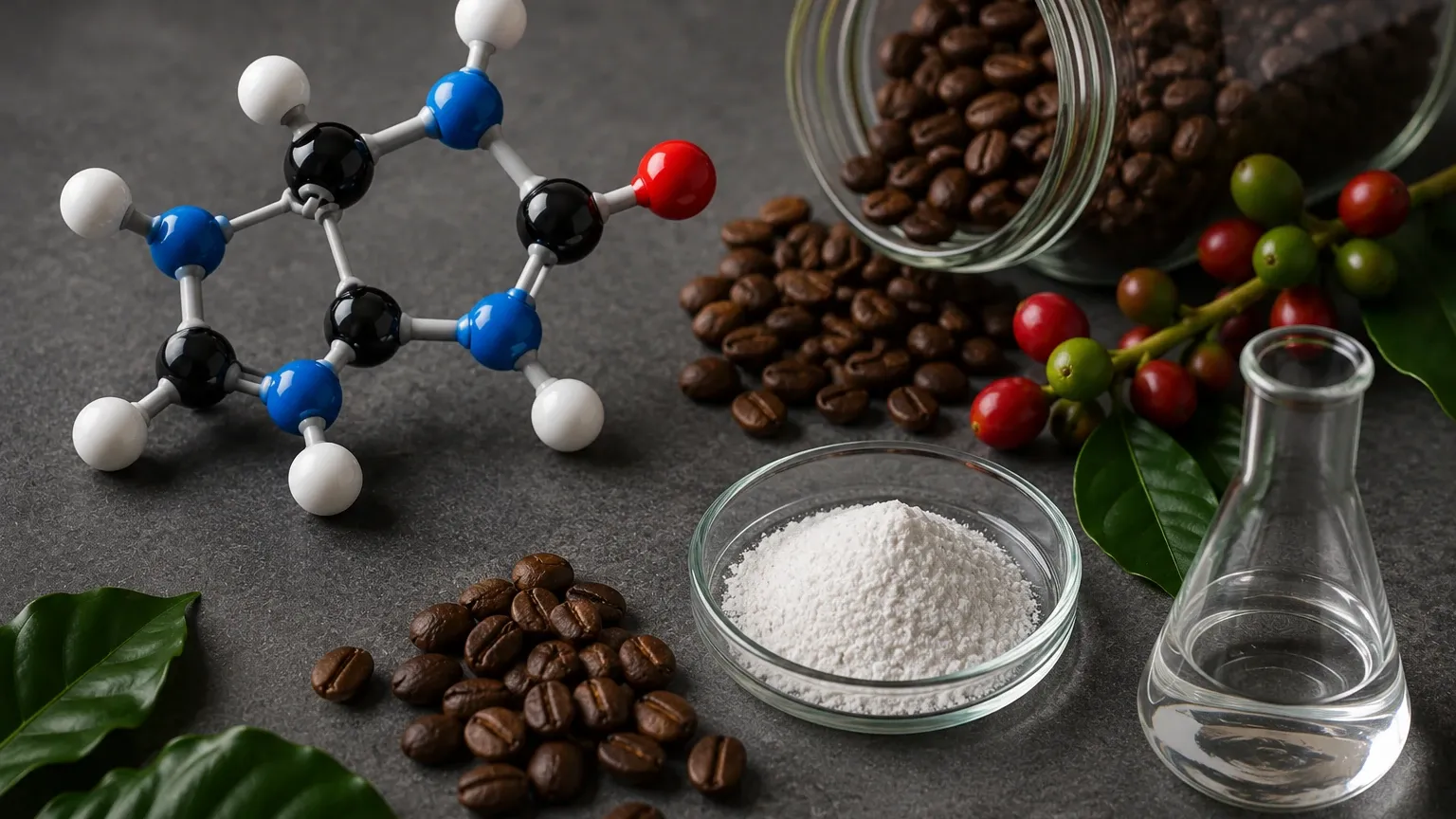
So, we’ve established that your morning cuppa or afternoon espresso is more than just a comforting ritual. It’s a chemical intervention. But what is this substance we enthusiastically chase down every day? At its most basic, caffeine is a naturally occurring stimulant. Think of it as nature’s little wake-up call. Diligently produced by over 60 different plant species. Most well-known are the coffee beans, but also present in tea leaves, cocoa pods, and even the guarana berry.
Globally, caffeine holds the title of the most widely consumed psychoactive substance. Forget alcohol or nicotine. It’s caffeine that keeps the UK running from Dundee to Dover. For many of us here in Britain, the first dose, whether from a strong builder’s brew or a flat white, signals the true start of the working day. It’s a non-negotiable part of the modern British schedule.
The Scientific Definition: Beyond the Bean
Moving past the simple description, caffeine has a much more precise identity in the laboratory. Scientifically, it belongs to a class of compounds known as methylxanthine alkaloids. If you’re feeling technical, its official IUPAC name is 1,3,7-trimethylxanthine. This complex structure is key to its power because it allows the molecule to interact directly with our central nervous system (CNS), delivering that tell-tale jolt of energy and focus we crave.
For context, consider the dose. A standard cup of filter coffee (around 250ml) in a typical UK café generally contains between 90mg and 150mg of caffeine. This isn’t some new-age synthetic drug. It’s a well-understood alkaloid that has shaped human social habits for centuries.
Understanding this chemical blueprint is crucial because it explains why caffeine has its effects. Ready to delve into the mechanism? Next, we’ll explore precisely how this little molecule manipulates your brain chemistry to keep the eyelids open.
The Chemical Blueprint: What Caffeine is Actually Made Of
Now we understand caffeine’s role as the world’s favourite stimulant. It’s time to learn a bit more technical details and peer into its actual structure. Understanding the chemical composition is key to appreciating how it interacts with our bodies. Brewing a perfect cup of coffee is such a precise science.
Molecular Formula: The Building Blocks
At its core, caffeine is an organic compound. Its chemical identity is neatly summarised by its molecular formula:
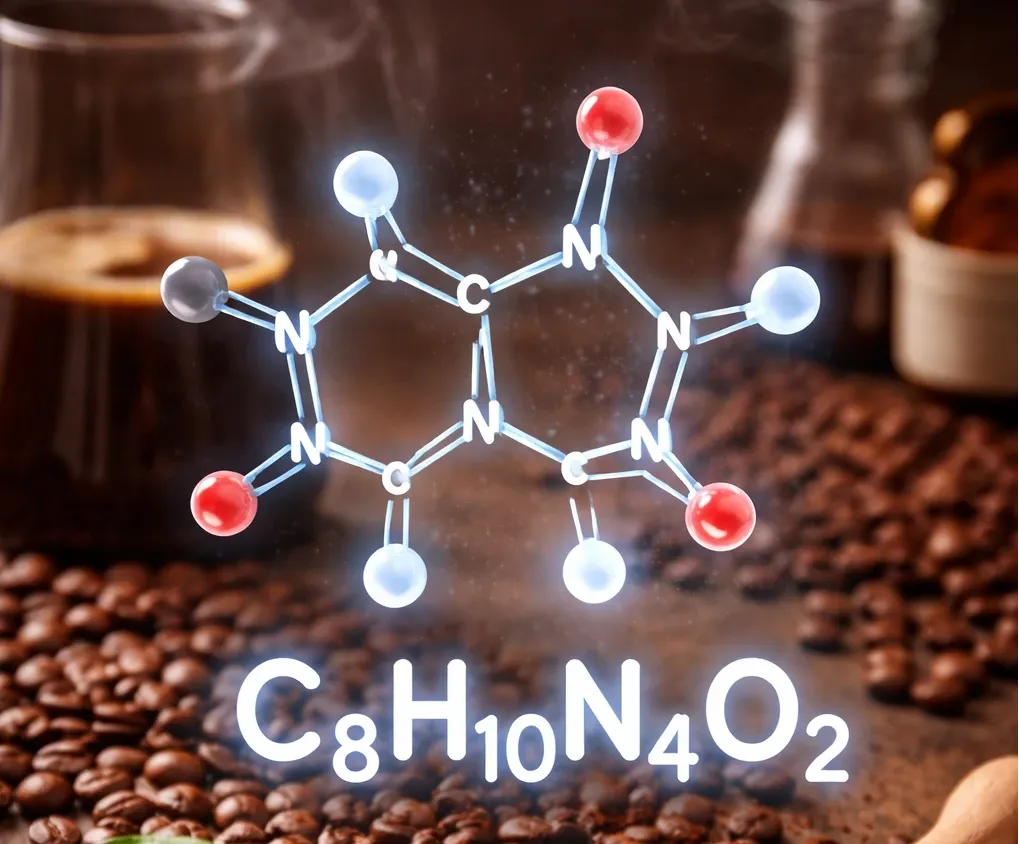
If we break that down, we see exactly what’s packed into every single molecule:
- 8 Carbon atoms (C): The fundamental backbone of the structure.
- 10 Hydrogen atoms (H): Filling out the structure.
- 4 Nitrogen atoms (N): The group responsible for its stimulating effects.
- 2 Oxygen atoms (O): Completing the functional groups.
Molecular Weight and Physical Form
This specific structure results in a molar mass of approximately 194 grams per mole (g/mol). In its pure, isolated form, caffeine appears as a fine, white, odourless crystalline powder. The defining characteristic of pure caffeine is its intensely bitter taste. This sharpness is what gives your morning espresso that distinctive edge, even when heavily diluted.
Solubility and Stability: Brewing Insights
The structure of caffeine has a major impact on how it is prepared. Critically, alkaloids are soluble in hot water. This isn't just a happy accident. It’s the entire reason your pour-over or French press works so effectively! The heat increases the kinetic energy of the water molecules. This allows them to surround and strip the caffeine molecules from the coffee grounds efficiently. Caffeine is generally stable under normal kitchen conditions. The important thing is that extremely long-lasting heat can degrade it. Leaving a pot on a scorching hot plate for hours often results in an unpleasantly bitter, 'stewed' flavour. A practical case study in thermal instability!
This fascinating chemical makeup sets the stage perfectly for our next exploration. How this tiny molecule manages to wake up millions of brains across the UK every single morning.
The Molecular Structure of Caffeine (Why It Works)
We appreciate caffeine as a naturally occurring compound. Let’s see the fascinating architecture that makes it such an effective pick-me-up. Understanding its shape is key to unlocking why that morning espresso truly wakes you up.
The Purine Core Structure Derived from Xanthine
At the heart of every caffeine molecule lies its skeletal foundation: the purine core. Chemically, caffeine is a derivative of xanthine. One of the fundamental purine bases found in nature. This core is constructed from two fused heterocyclic rings. An imidazole ring is joined to a pyrimidinedione ring. This rigid, somewhat flat structure is crucial. Think of it like a perfectly engineered key designed to fit a very specific lock in your brain.
The Role of Methyl Groups
The purine core provides the frame. The three attached methyl groups (CH3) transform xanthine into caffeine. These groups are strategically placed at positions 1, 3, and 7 of the ring structure. This trio of methyl additions is not arbitrary. It’s a masterpiece of chemical modification. These non-polar groups significantly increase caffeine’s fat solubility (lipophilicity). Why does this matter for your morning routine? High fat solubility allows caffeine to penetrate the selective blood-brain barrier. This allows it to reach your central nervous system with remarkable efficiency. Without these methyl groups, the molecule wouldn't be nearly as effective a stimulant.
Why Structure Matters
This precise and stable molecular geometry is what allows caffeine to interact so powerfully with adenosine receptors in your brain. Adenosine is the neurotransmitter that promotes sleepiness. It builds up throughout the day, making you feel drowsy. Caffeine’s structure mimics adenosine almost perfectly. This allows it to slot neatly into the adenosine receptor sites. Besides blocking the real adenosine from binding. This structural mimicry is the mechanism behind its stimulant effect. It's literally blocking the 'off' switch. Studies show that consuming 100mg of caffeine (about one strong cup) effectively blocks a significant proportion of daytime adenosine binding. Next, we’ll explore the fascinating pathways caffeine uses once it gains entry to the brain.
How Caffeine Works Chemically in the Body
So, you've brewed your morning cup of coffee. But what's happening inside your brain once that lovely caffeine hits your system? It's a fascinating piece of biochemistry. That explains why your 10 am slump miraculously disappears. Caffeine doesn't actually give you "energy" in the caloric sense. Rather, it prevents you from feeling tired.
The Adenosine Blocking Mechanism
The star of this show is a neurotransmitter called adenosine. Throughout the day, as your brain cells use energy, adenosine levels gradually build up. Think of it as a chemical signal indicating fatigue. The longer you’re awake, the more adenosine accumulates. This binding to specific receptors slows down neural activity, making you feel sleepy. This is why. After a long day working on your spreadsheets or battling the morning commute, you reach for the duvet.
Here’s where caffeine steps in, looking suspiciously like adenosine. Caffeine's molecular structure is similar enough to fool the brain. It binds to those same adenosine receptors, effectively acting as a competitive inhibitor. It occupies the parking space but doesn't trigger the "sleepy" message. By blocking the legitimate adenosine, caffeine prevents those drowsiness signals from getting through. You typically feel the need for a top-up around 3 pm. It's because your natural adenosine has reached a peak that your existing caffeine levels can't handle.
Broader Neurochemical Effects
This blockade has ripple effects. With adenosine sidelined, other stimulating neurotransmitters can become more prominent. Crucially, caffeine indirectly increases the release of dopamine. This is the chemical associated with focus, motivation, and reward. It also boosts signals related to alertness. This leads to that familiar feeling of heightened concentration and reduced perceived fatigue.
Absorption and Metabolism: The Speed of the Buzz
The efficacy of your coffee relies on its swift journey. Caffeine is absorbed remarkably quickly through the stomach and small intestine. Often achieves peak concentration in the bloodstream within 45 minutes. Once processed, it’s broken down in the liver into metabolites known as dimethylxanthines. This contributes slightly to its ongoing effects.
To manage your alertness spikes effectively, consider this tip. Try delaying your first coffee until 90 minutes after waking. This allows natural cortisol levels to peak first. It means you’re using caffeine to genuinely counteract fatigue later. Rather than interfering with your body’s natural wake-up process.
Now that we understand the internal mechanics. Let's explore where this powerful substance actually comes from.
Natural versus Synthetic Caffeine: What’s the Real Difference?
So, you’re enjoying your morning brew. You might wonder. Is the caffeine buzz you’re getting from your favourite Kenyan-roasted coffee different from the energy shot grabbed from the petrol station? When we talk about caffeine, chemically, the molecule is the same, regardless of its origin. However, the journey this molecule takes to reach your bloodstream certainly isn't.
Natural Sources: The Traditional Brew
In the UK, the lion's share of our caffeine comes from naturally occurring sources. Coffee beans are the heavy hitters. But we also consume caffeine found in many 'natural' energy blends. It's derived from tea leaves, cocoa solids in chocolate, and increasingly, also from ingredients such as guarana. In these sources, caffeine exists alongside hundreds of other naturally occurring compounds. For instance, coffee contains chlorogenic acids. They are responsible for taste, aroma and the overall physiological experience.
Synthetic Production: The Lab-Grown Boost
Much of the caffeine found in soft drinks, energy drinks, and over-the-counter stimulants is produced. Synthetic caffeine is manufactured through industrial chemical reactions. Often involving compounds like dimethylurea and malonic acid. It’s a highly purified, cost-effective method to produce the exact same C8H10N4O2 molecule.
Is There a Chemical Difference?
When analysed in a lab, natural caffeine and synthetic caffeine are identical. They bind to the same adenosine receptors in your brain. The real divergence is in delivery and accompanying chemistry. Consider this: a standard cup of filter coffee can take 30 to 60 minutes for peak absorption, modulated by the fats and fibres in the bean. In contrast, a typical energy drink provides a high concentration of synthetic caffeine much faster. Very often, without the mitigating effects of other natural compounds. The study shows that the concentration of synthetic caffeine from an energy drink is faster in your blood. It can be 15 minutes sooner than that from a brewed coffee.
Actionable Tip: If you find yourself sensitive to the rapid jolt of energy drinks, consider moving to slower-releasing ones. Try naturally sourced caffeine, such as a pour-over coffee. This gives your body more time to manage the influx.
Understanding the source helps us appreciate not just what we consume, but how it affects us. Next, we will delve into the fascinating topic of caffeine metabolism. How your liver actually processes this pervasive chemical.
Chemical Properties That Affect Your Coffee Experience
So we understand caffeine’s foundational structure. Let’s delve into this. How its specific chemical properties actively shape what hits your palate every morning. It’s not just what caffeine is, but how it behaves that dictates your daily brew’s character.
Bitterness and Taste Chemistry
Caffeine, being an alkaloid, inherently possesses a bitter taste. This is a fundamental characteristic encoded in its molecular structure. You might associate varying degrees of bitterness with different roasts. Dark French roast tastes more intensely bitter than a light Kenyan. It’s important to note that the roasting process primarily affects other compounds like chlorogenic acids. This influences overall acidity and aroma precursors. The caffeine molecule itself remains largely unchanged. So, if you are sensitive to bitterness, that underlying sharpness is the caffeine molecule. It is doing a job, irrespective of how the beans were processed.
Heat Stability
One reason caffeine is so reliable in our morning routine is its impressive robustness. Caffeine boasts a high melting point. Typically, it is around 235–238°C. Standard brewing temperatures rarely exceed 100°C. The molecule is completely stable. It doesn't degrade or break down during preparation. This thermal stability ensures that the caffeine content, measured in the green bean, effectively moves into your final coffee cup. It's making it a predictable stimulant.
Interaction with Other Compounds
Caffeine doesn't act in isolation. The impact is magnified by its interaction with the thousands of other chemicals extracted from the coffee grounds. For instance, the perception of caffeine’s bitterness is balanced, or masked, by the acids. They are extracted during brewing, which provides those desirable fruity or winey notes. Furthermore, the oils extracted contribute to mouthfeel. A richer flavour can make the overall profile seem smoother, and the perceived bitterness of caffeine will be lessened. Understanding the above core chemical behaviours creates the perfect step for exploring the final piece of the puzzle. How the body actually absorbs and utilises this remarkable molecule.
Benefits and Risks Explained Chemically
Benefits (From a Molecular View)
So, how does that morning cup of coffee actually perform its magic? It all comes down to a subtle molecular impersonation. Caffeine boasts a remarkably structured. Similar to adenosine, a neurotransmitter that naturally builds up in your brain throughout the day. While drinking coffee, caffeine swiftly crosses the blood-brain barrier and acts as an adenosine receptor antagonist. Essentially, it blocks adenosine from docking with its receptors. The result? That familiar 'kick'. By preventing the natural brakes from engaging, caffeine stimulates neurotransmitters. Like dopamine and norepinephrine. Stimulant flows more freely, leading to marked increases in central nervous system (CNS) activity. Hence, the improved alertness.
This molecular blockade has tangible performance benefits. Studies often show that caffeine intake (around 100-300mg, typical of two to three mugs) significantly enhances reaction time and cognitive performance. Particularly in tasks requiring sustained attention. If you’ve ever powered through a tricky spreadsheet or managed an early morning meeting with newfound clarity, you’ve witnessed this antagonism in action.
Risks of Overconsumption
While blocking fatigue is beneficial, pushing the dosage too high leads to the overstimulation of the CNS. This happens because caffeine doesn't just block adenosine. Excessive amounts can start interfering with other neurotransmitter systems, leading to a cascade effect. For many Brits, this manifests as classic symptoms of 'too much espresso'. Noticeable anxiety, the inability to switch off, leading to insomnia (even hours later), and a significantly increased heart rate or palpitations. Consider the scenario. Someone is downing a triple-shot latte followed by an energy drink later in the afternoon. This level of sustained CNS agitation is rarely conducive to long-term well-being.
Dependence Explained
The body is remarkably adaptive. Regular, significant caffeine consumption forces the brain to compensate for the constant adenosine blockade by creating more adenosine receptors. This physiological adjustment means that to achieve the same level of alertness you once got from one cup, you now need two. This phenomenon is the foundation of physical dependence. When caffeine intake is abruptly halted, those extra receptors are suddenly flooded with natural adenosine. This is leading to withdrawal symptoms like headaches (caused by altered cerebral blood flow) and drowsiness. Understanding this receptor upregulation helps explain why gradually reducing your intake, rather than going 'cold turkey,' is usually a gentler path to resetting your brain chemistry.
Now that we've explored the molecular highs and lows, let’s look at how these effects translate into long-term lifestyle choices...
How Much Caffeine Is Safe? Understanding Your Limits (UK Edition)
Now that we've explored the chemistry behind that morning kick, the natural next question is: how much is too much? For the average adult navigating the UK coffee scene. Understanding safe consumption levels is crucial for enjoying your daily brew without side effects.
Recommended Intake: The General Guideline
For most healthy adults in the UK. The consensus from bodies like the European Food Safety Authority (EFSA) suggests a maximum safe daily intake of up to 400 mg of caffeine. Consider this as your general benchmark. To put that into tangible terms for your daily routine. 400 mg is roughly equivalent to three to four standard cups of filter coffee consumed throughout the day.
However, it’s important to remember that caffeine isn't just in your morning latte. A can of standard energy drink can contain 80 mg, and a standard mug of black tea usually hovers around 75 mg. Keep a mental record of all your sources if you're hitting that upper limit.
Factors That Affect Your Personal Tolerance
The 400 mg figure is a guideline, not a strict rule set in stone for everyone. Your personal 'safe zone' can vary dramatically based on several personal factors:
- Body Weight: A smaller individual will generally feel the effects of the same dose more intensely than someone heavier.
- Genetics: Some people are genetically 'fast metabolizers' of caffeine. This means their body processes it quickly, allowing them to tolerate more. Others are 'slow metabolizers' and might experience jitters after just one cup.
- Liver Metabolism Rate: The liver breaks down caffeine. Underlying health conditions affecting liver function can slow clearance times. This may cause caffeine to remain in the body longer.
While moderation is key for adults, it’s vital to note that pregnant or breastfeeding women are advised to keep their intake below 200 mg daily. We understand the safe boundaries. Let's go next. How caffeine actually impacts your energy levels.
Practical Tips for Coffee Drinkers
Understanding the chemistry behind caffeine is fascinating. But how does this knowledge translate into a better daily coffee experience? Moving beyond the science. Here are actionable tips to help you optimise your caffeine intake. Manage your energy levels and protect your sleep.
Optimise Your Caffeine Intake Timing
The timing of your cup is perhaps the most critical factor in maximising benefits while minimising negative side effects. Caffeine works by blocking adenosine receptors in the brain—the chemicals that signal tiredness. However, your body naturally produces adenosine throughout the day, peaking in the evening.
- Morning or Early Afternoon is Best. Aim to have your last significant dose of caffeine at least 6 to 8 hours before your intended bedtime. For most people, winding down around 10 PM, cutting off caffeine consumption by 2 PM. For example, if you often suffer from ‘wired but tired’ nights, try switching your usual 4 PM flat white to a decaf after lunch.
- Avoid Late-Day Consumption. Consuming caffeine too late can significantly delay bedtime. It can reduce the quality of deep (slow-wave) sleep, even if you feel you can fall asleep fine.
Choose the Right Brew for Your Needs
Not all coffees deliver caffeine equally. The preparation method has a major impact on the final concentration and the speed at which caffeine reaches the body.
- Espresso, Filter Coffee, and Instant Coffee. A standard shot of espresso (around 60-80mg) delivers caffeine quickly due to its high concentration. A large mug of filter coffee (often 150-200mg) provides a slower, sustained release. If you need a quick jolt, espresso works. For steady morning focus, a filter brew is often better.
- Consider Strength vs Volume. A large, weak Americano might contain more total caffeine than a small, strong Ristretto. Always check if you are reaching for volume or intensity when managing your dose.
Manage Your Dependence Cycle
Regular, high intake can lead to tolerance, meaning you need more coffee just to feel 'normal.' To maintain sensitivity to caffeine’s effects:
- Introduce Cycle Breaks. Try implementing one or two 'caffeine holidays' per week. Perhaps replace your afternoon coffee with herbal tea or simply water. This helps reset your adenosine sensitivity.
- Stay Hydrated. Caffeine is a mild diuretic. Ensure you are counteracting fluid loss by drinking plenty of water alongside your coffee. Hydration supports overall metabolism and helps your body process caffeine more efficiently.
Apply these simple, practical adjustments. You can harness the focus-enhancing power of caffeine without sacrificing your energy levels or your sleep quality. Ready to delve deeper into how caffeine affects your body’s internal clock? Let’s explore the fascinating world of caffeine and your circadian rhythm next.
The Chemical Curtain Call: Brewing Smarter Coffee Habits
So, we bring this chemical exploration to a close. It's clear that your beloved morning brew is far more sophisticated than just a comforting ritual. We’ve peeled back the layers of the coffee bean to reveal caffeine: a remarkably precise, biologically active molecule. It's a fascinating structure. The xanthine alkaloid framework allows for mimicking adenosine, successfully blocking those drowsy signals in your brain and keeping you sharp for that 10 am meeting.
Understanding this molecular mechanism isn’t just academic. It's genuinely empowering. For instance, knowing that caffeine has a half-life of about five hours. It means that if you fancy a 4 pm espresso (a common habit across the UK, especially after lunch), nearly half of that stimulant is still circulating in your system as you try to drift off around 9 pm. This knowledge lets you make informed choices. You can opt for a decaf or switch to herbal tea later in the day to protect your precious sleep quality.
Actionable Tip for Smarter Consumption: To optimise your caffeine intake, try front-loading your consumption. Aim to have your main caffeine hit within the first six hours of waking. If you weigh around 70kg, for example, staying within the recommended safe daily limit of 400mg (roughly four standard mugs of filter coffee) should keep you energised without tipping into jitters or late-night disruption. Remember, small adjustments based on chemistry yield big improvements in daily performance and rest.
The next time you savour that rich aroma or feel that familiar lift after your flat white, remember you are participating in a sophisticated biological interaction. Your daily coffee isn’t just a habit—it’s chemistry in action.
This article is for informational and educational purposes only and does not constitute medical or professional advice. Please read our full Disclaimer for more information.
Frequently Asked Questions
Caffeine is a natural stimulant (technically a methylxanthine alkaloid) found in coffee beans, tea leaves, and cacao. When you drink your morning flat white, caffeine is absorbed into your bloodstream in approximately 45 minutes and goes directly to your brain. There, it blocks adenosine receptors — the chemical signals that make you feel drowsy. Result? You feel more alert and focused. It's essentially pressing pause on your body's tiredness signals. Clever little molecule, really.
It varies more than most people realise. A standard double espresso contains roughly 60–80 mg of caffeine, while a 250ml mug of filter coffee can contain anywhere from 80 to 120mg. Robusta beans contain nearly double the caffeine of Arabica. So that cheap supermarket blend might actually be hitting harder than your fancy single-origin pour-over. Instant coffee typically contains around 65mg per mug. If you're watching your intake, the brewing method and bean variety matter just as much as cup size.
For most healthy adults, no, not at moderate levels. The European Food Safety Authority considers 400mg daily (roughly four flat whites) perfectly safe for healthy adults. Where it gets tricky is with pregnancy, anxiety disorders, or certain heart conditions. Caffeine raises cortisol and temporarily bumps blood pressure. This is fine occasionally, but worth monitoring daily. Think of it like alcohol. Sensible amounts are fine for most people, but it's not entirely consequence-free either. Know your own body.
Your brain adapts. It's brilliant at that. When caffeine regularly blocks adenosine receptors, your brain simply grows more of them to compensate. So you need more caffeine to achieve the same alert feeling. This is tolerance, and it builds within days of consistent use. That's why your Monday morning espresso hits differently after a weekend off. A two-week caffeine break resets your receptor levels beautifully. Many coffee professionals deliberately cycle their intake, keeping sensitivity sharp and reducing that dependency creep.
Caffeine has a half-life of roughly five to six hours in most adults. It means half of it is still circulating six hours after your last cup. So that 3 pm latte? A quarter of it is still active at midnight, quietly disrupting your deep sleep without you realising. Genetics play a huge role here. Some people metabolise caffeine twice as fast due to a variant in the CYP1A2 gene. If you're a slow metaboliser, that afternoon coffee is doing far more overnight damage than you'd expect.